Back to the directoryFind in the timeline
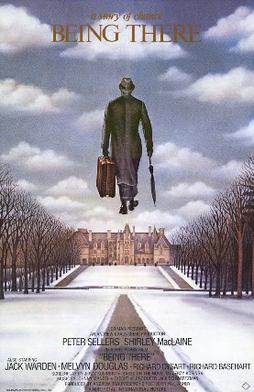

Being There
After losing the household that sheltered him, a gardener enters Washington social circles. People in positions of power read political insight into his comments about gardening.
- Directed or created by
- Hal Ashby
- Country and language
- United States · English
- Content notes
- Based on the official Criterion synopsis only: death of a guardian and political/celebrity satire. Not a full content review.
Why this work matters for psychology
The satire illustrates how high-status social contexts and prior expectations can lead audiences to project deep political wisdom onto ambiguous, literal remarks.
Psychological connections
Screen stories illustrate how psychological processes look and feel in narrative form; they are not empirical proof or clinical case studies.
Interpretation shaped by social context
The premise shows influential listeners construing literal gardening remarks as political wisdom, inviting discussion of how status cues and social settings shape attribution.
Ambiguity and top-down expectation
When Chance's remarks are heard as sagacious pronouncements, the story prompts questions about how top-down expectations fill in meaning when a speaker's words are brief or ambiguous.
Portrayal and accuracy limitations
- Adapted from Jerzy Kosinski's novel, the film is a political and social satire; it does not validate empirical claims about political persuasion or cognitive assessment.
- Edition note: the Criterion Collection page lists a 130-minute runtime, which may differ slightly across archival video editions.
Questions to watch for
- 1. What leads listeners in the story to hear profound political wisdom in literal remarks about gardening?
- 2. How do a speaker's surroundings and social endorsements shape the way others interpret their words?
In the Psy101 course
Pairs the satire's questions about social context and listener interpretation with OpenStax Section 12.1 on situational and dispositional attributions; the textbook section is a conceptual companion and does not analyze this film.
- OpenStax Psychology 2e, section 12.1: What Is Social Psychology?
- OpenStax Psychology 2e, Ch. 12: Social Psychology
Textbook links show where these concepts sit in an introductory course; they do not study this screen work. See the full topics and course map.
Companion readings and work source
Readings labeled as conceptual companions or contextual references study the psychological topic rather than this screen work.
- [1]Collection, T. C. (1979). The criterion collection: Being there. https://www.criterion.com/films/29009-being-thereChecked 2026-10-23.Release or archive checkedSelected official synopsis, credits, or catalog details checked; this does not imply a full viewing.
- [2]Spielman, R. M., Jenkins, W. J., & Lovett, M. D. (2020). Psychology 2e. OpenStax. https://openstax.org/books/psychology-2e/pages/12-1-what-is-social-psychology(OpenStax course textbook · Full-text passages checked · Checked 2026-10-23).Conceptual Companion (Does Not Study This Work)Conceptual companion: does not study this work. It investigates the underlying psychological construct or textbook topic.Examines how interpersonal and situational contexts shape attribution and social judgment.Note: Full rendered OpenStax section prose inspected; conceptual companion only.