Back to the directoryFind in the timeline
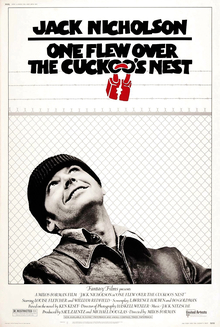

One Flew Over the Cuckoo's Nest
Hoping to avoid prison, a man enters a psychiatric institution and challenges the authority governing life on the ward.
- Directed or created by
- Milos Forman
- Content notes
- Confinement in a psychiatric institution and conflict over authority.
Why this work matters for psychology
The ward offers a setting for examining agency, institutional power, and the history of psychiatry.
Psychological connections
Screen stories illustrate how psychological processes look and feel in narrative form; they are not empirical proof or clinical case studies.
Institutional authority
The conflict on the ward invites discussion of agency and authority. Hirshbein's historical article provides a separate interpretation of liberation and institutional power.
Historical portrayal and current care
What would a viewer need to know before comparing a historical dramatic institution with mental health care in another time or place?
Portrayal and accuracy limitations
- The film is a historical drama, not a guide to present-day psychiatric care. The companion scholarship discusses its cultural history.
Questions to watch for
- 1. How does the ward routine affect the choices available to its patients?
- 2. Why is it important to distinguish a 1975 dramatic critique of institutional power from contemporary mental health care?
In the Psy101 course
Connects the film's critique of institutional authority with Hirshbein's (2026) historical scholarship and OpenStax sections on conformity/obedience (12.4) and mental health treatment modalities (16.2).
- OpenStax Psychology 2e, section 12.4: Conformity, Compliance, and Obedience
- OpenStax Psychology 2e, section 16.2: Types of Treatment
- OpenStax Psychology 2e, section 16.1: Mental Health Treatment: Past and Present
- OpenStax Psychology 2e, Ch. 12: Social Psychology
- OpenStax Psychology 2e, Ch. 16: Therapy and Treatment
Textbook links show where these concepts sit in an introductory course; they do not study this screen work. See the full topics and course map.
Companion readings and work source
Readings labeled as conceptual companions or contextual references study the psychological topic rather than this screen work.
- [1]Axmaker, S. (1975). One flew over the cuckoo’s nest (1975). https://www.tcm.com/articles/afi-top-100/296733/one-flew-over-the-cuckoo-s-nest-1975Checked 2026-10-23.Release or archive checkedSelected official synopsis, credits, or catalog details checked; this does not imply a full viewing.
- [3]Hirshbein, L. (2026). The irony of liberation in one flew over the cuckoo’s nest. The Journal of American Culture, 49(3), 155–163. https://doi.org/10.1111/jacc.70067(Peer-reviewed or academic book · Selected passages checked · Checked 2026-10-23).Studies This WorkDirect commentary or scholarship: this publication specifically discusses or evaluates this screen work.Places the 1975 film in the history of social psychiatry and debates about institutional power and liberation.Note: Publisher HTML full text accessible; metadata, abstract, introduction, and sections 5 and 7 inspected (not claiming entire article read). Historical interpretation, not a clinical-effect study.
- [2]Spielman, R. M., Jenkins, W. J., & Lovett, M. D. (2020). Psychology 2e. OpenStax. https://openstax.org/books/psychology-2e/pages/16-1-mental-health-treatment-past-and-present(OpenStax course textbook · Selected passages checked · Checked 2026-10-23).Conceptual Companion (Does Not Study This Work)Conceptual companion: does not study this work. It investigates the underlying psychological construct or textbook topic.Places mental-health treatment in historical and service contexts, including deinstitutionalization and voluntary versus involuntary care. It offers a history-oriented companion for institutional narratives. The inspected material does not substantiate detailed contemporary ECT procedures, consent rules or treatment indications.Note: Title, objectives, selected beginning/end paragraphs and section headings inspected; full section prose was retrieved, but no whole-section or whole-book read is claimed.
- [4]Spielman, R. M., Jenkins, W. J., & Lovett, M. D. (2020). Psychology 2e. OpenStax. https://openstax.org/books/psychology-2e/pages/16-2-types-of-treatment(OpenStax course textbook · Selected passages checked · Checked 2026-10-23).Conceptual Companion (Does Not Study This Work)Conceptual companion: does not study this work. It investigates the underlying psychological construct or textbook topic.Compares contemporary psychotherapy and biomedical treatment modalities.Note: Official OpenStax section headings and relevant paragraphs inspected; conceptual companion only, does not study this film.