Back to the directoryFind in the timeline
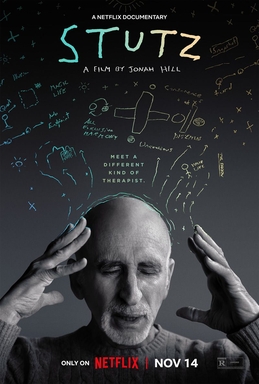

Stutz
Jonah Hill films conversations with Phil Stutz, his psychiatrist and friend. Their exchange includes personal experiences of mental health and Stutz's visualization exercises, known as The Tools.
- Directed or created by
- Jonah Hill
- Content notes
- Based on the official synopsis only: candid discussion of personal mental health journeys, a session between a psychiatrist and his patient, and visualization exercises. The retained text names no specific conditions or events, so the absence of detail is not an assurance. Not a full content review.
Why this work matters for psychology
The synopsis describes a film in which a psychiatrist and his friend and patient discuss their own mental health and present a set of visualization exercises to a general audience, which makes it a useful case for asking how popular psychology is framed.
Psychological connections
Screen stories illustrate how psychological processes look and feel in narrative form; they are not empirical proof or clinical case studies.
Two journeys on camera
The synopsis describes candid discussion of both Stutz's and Hill's personal mental health journeys. A viewer might ask what it means to hear about vulnerability from both people in a therapy-related relationship, not only from the patient. This is an editorial prompt, not a claim about what the film shows in detail.
When patient and friend overlap
The synopsis says the session flips the typical doctor-patient dynamic between two friends from different generations, and that the director is also Stutz's patient. A viewer might ask how overlapping roles shape what can be said and what is left unsaid.
Portrayal and accuracy limitations
- The only work source is a short promotional synopsis that describes The Tools and calls the experience therapeutic. This entry reports that framing without treating it as clinical evidence or evaluating effectiveness.
- The synopsis ranks Stutz among top psychiatrists, credits him with helping many patients, and calls the film accessible to anyone. These are promotional claims, not independent assessments, and no outcome review was done. The director is also Stutz's patient and friend, so the account comes from within that relationship. This is an editorial observation about perspective, not a judgment of the film.
Questions to watch for
- 1. The synopsis says the film flips the usual doctor-patient dynamic. What would you look for to see how that shows up in the conversation?
- 2. If a film walks you through a visualization exercise, what would you need to know to judge whether it helps?
In the Psy101 course
Pairs the documentary's presentation of visualization exercises ('The Tools') with OpenStax Section 16.2 comparing psychotherapy orientations and biomedical treatments; the textbook section does not assess the effectiveness of Stutz's exercises.
- OpenStax Psychology 2e, section 16.2: Types of Treatment
- OpenStax Psychology 2e, Ch. 16: Therapy and Treatment
Textbook links show where these concepts sit in an introductory course; they do not study this screen work. See the full topics and course map.
Companion readings and work source
Readings labeled as conceptual companions or contextual references study the psychological topic rather than this screen work.
- [1]Netflix Media Center. (n.d.). Netflix media center official page: Stutz. https://media.netflix.com/en/only-on-netflix/81387962Checked 2026-10-23.Release or archive checkedSelected official synopsis, credits, or catalog details checked; this does not imply a full viewing.
- [2]Spielman, R. M., Jenkins, W. J., & Lovett, M. D. (2020). Psychology 2e. OpenStax. https://openstax.org/books/psychology-2e/pages/16-2-types-of-treatment(OpenStax course textbook · Selected passages checked · Checked 2026-10-23).Conceptual Companion (Does Not Study This Work)Conceptual companion: does not study this work. It investigates the underlying psychological construct or textbook topic.Compares psychotherapy orientations and biomedical treatment modalities in introductory psychology.Note: Official OpenStax section headings and relevant paragraphs inspected; conceptual companion only, does not assess the effectiveness of Stutz's tools.