Back to the directoryFind in the timeline
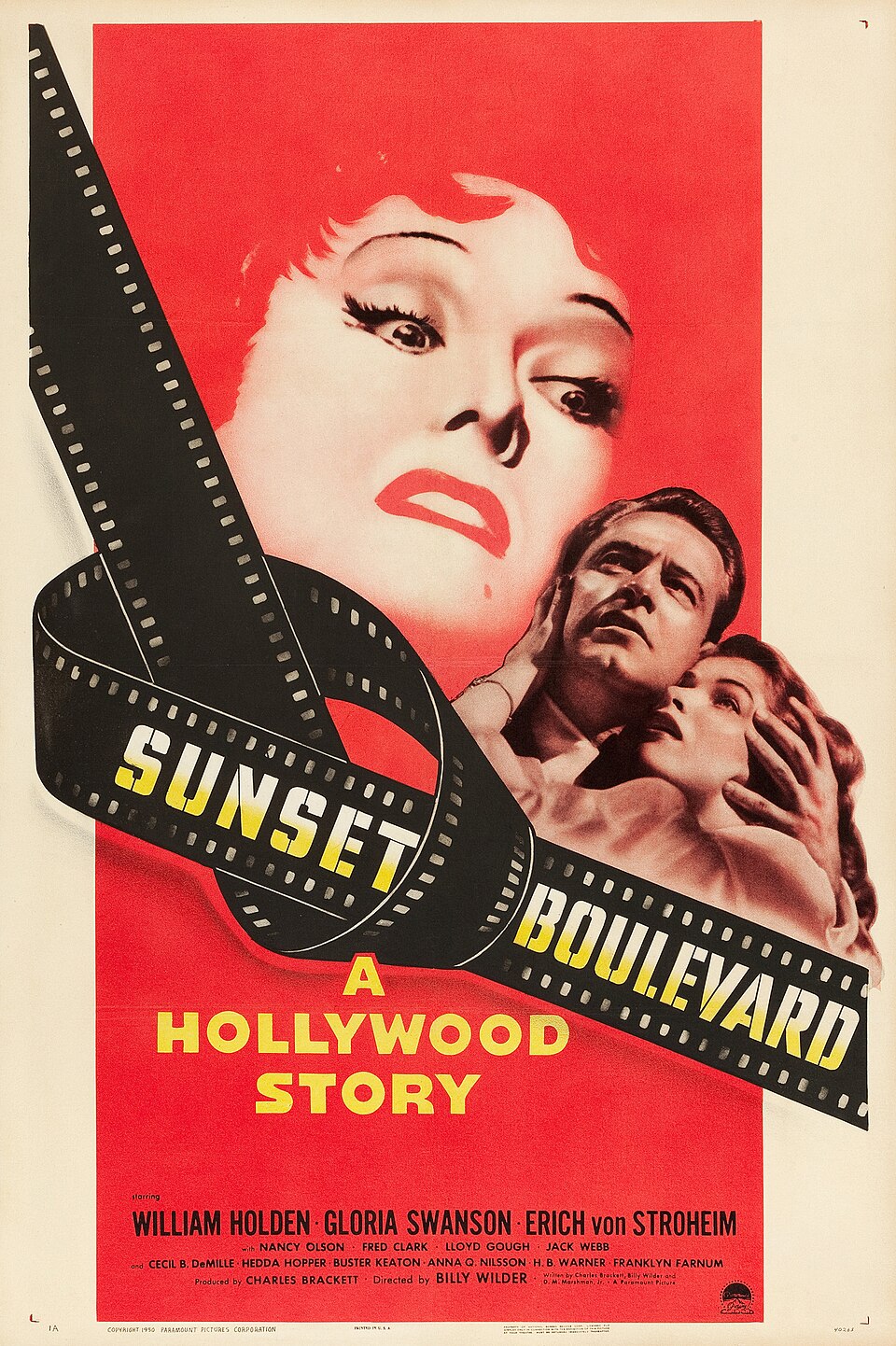

Sunset Boulevard
A former silent-film star and a struggling screenwriter enter a relationship.
- Directed or created by
- Billy Wilder
- Content notes
- An unequal relationship involving a struggling writer and former star.
Why this work matters for psychology
The relationship invites questions about self-image, status, and the loss of a public role.
Psychological connections
Screen stories illustrate how psychological processes look and feel in narrative form; they are not empirical proof or clinical case studies.
A former public role
A former star and a struggling writer offer different positions from which to consider status and self-image. How does a public role shape the judgments viewers make?
An unequal relationship
What forms of dependence or influence can viewers identify in the relationship, and what evidence in the story supports those interpretations?
Portrayal and accuracy limitations
- Psychological readings of these characters are interpretations, not diagnoses.
Questions to watch for
- 1. How do the writer's and former star's public roles shape their relationship?
- 2. Which details support your interpretation of dependency or influence?
In the Psy101 course
Use Section 10.1 (Motivation) and Section 12.2 (Self-Presentation) as conceptual companions for questions about status and public roles.
- OpenStax Psychology 2e, section 10.1: Motivation
- OpenStax Psychology 2e, section 12.2: Self-presentation
- OpenStax Psychology 2e, Ch. 10: Motivation and Emotion
- OpenStax Psychology 2e, Ch. 12: Social Psychology
Textbook links show where these concepts sit in an introductory course; they do not study this screen work. See the full topics and course map.
Companion readings and work source
Readings labeled as conceptual companions or contextual references study the psychological topic rather than this screen work.
- [1](TCM), T. C. M. (1950). Turner classic movies (TCM) official catalog: Sunset boulevard. https://www.tcm.com/watchtcm/titles/4254Checked 2026-10-23.Reference catalog checkedCatalog details and an indexed synopsis checked; the full page was region restricted.
- [2]Spielman, R. M., Jenkins, W. J., & Lovett, M. D. (2020). Psychology 2e. OpenStax. https://openstax.org/books/psychology-2e/pages/12-2-self-presentation(OpenStax course textbook · Selected passages checked · Checked 2026-10-23).Conceptual Companion (Does Not Study This Work)Conceptual companion: does not study this work. It investigates the underlying psychological construct or textbook topic.Introduces social roles, norms and scripts, and discusses the Stanford prison experiment with criticisms and replication limitations. It is useful for questions about expected behavior in a setting. It should not be used as an uncomplicated proof that a role inevitably determines conduct.Note: Title, objectives, selected beginning/end paragraphs and section headings inspected; full section prose was retrieved, but no whole-section or whole-book read is claimed.
- [3]Spielman, R. M., Jenkins, W. J., & Lovett, M. D. (2020). Psychology 2e. OpenStax. https://openstax.org/books/psychology-2e/pages/10-1-motivation(OpenStax course textbook · Selected passages checked · Checked 2026-10-23).Conceptual Companion (Does Not Study This Work)Conceptual companion: does not study this work. It investigates the underlying psychological construct or textbook topic.Discusses intrinsic and extrinsic motivation, self-efficacy, and social motives.Note: Official OpenStax section headings and relevant paragraphs inspected; conceptual companion only, does not study this film.