Back to the directoryFind in the timeline
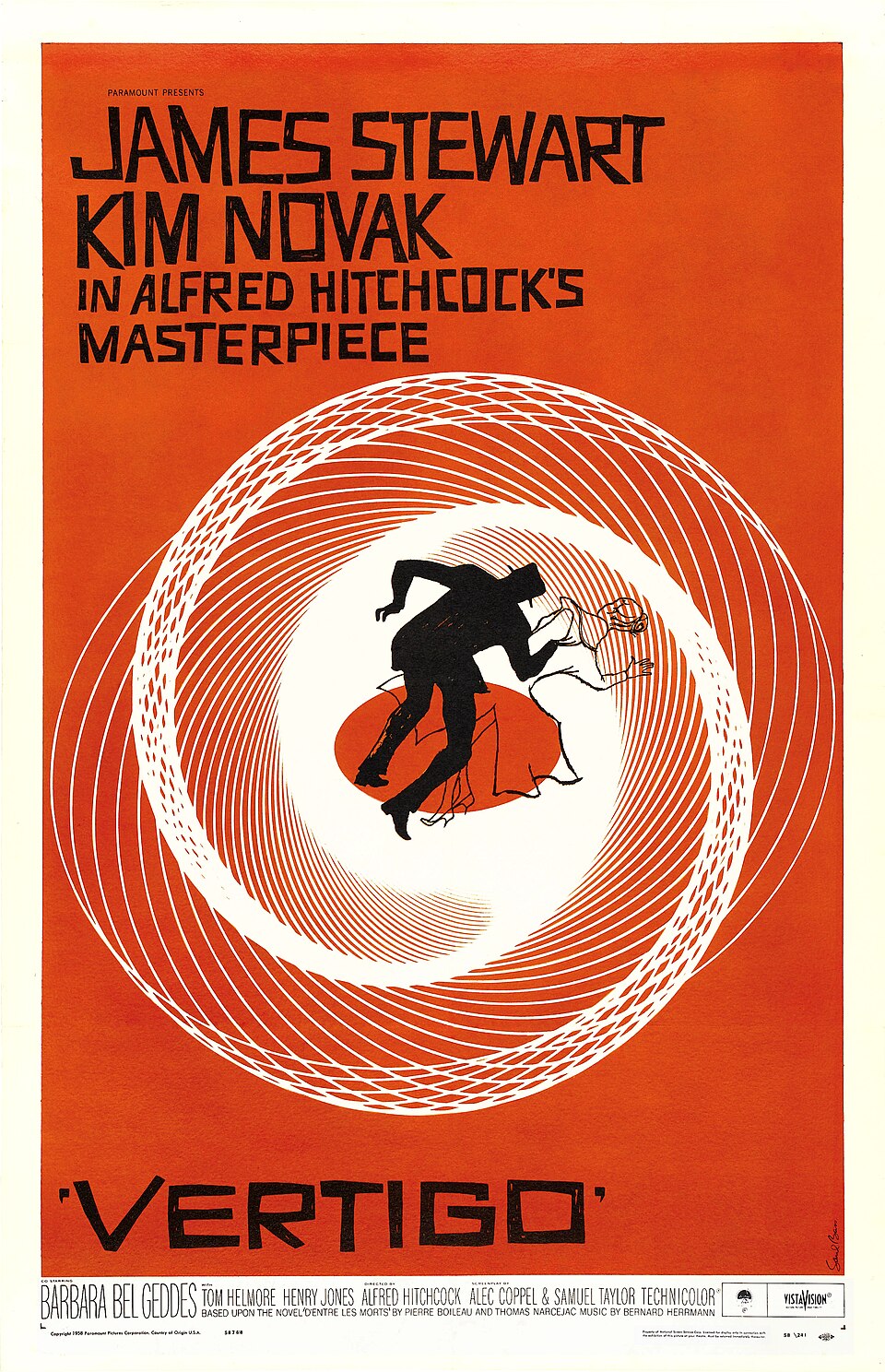

Vertigo
A former San Francisco detective with a fear of heights is hired to follow a woman and becomes increasingly absorbed in her.
- Directed or created by
- Alfred Hitchcock
- Content notes
- Fear of heights and an increasingly absorbing investigation.
Why this work matters for psychology
The investigation invites viewers to separate observation from expectation and desire.
Psychological connections
Screen stories illustrate how psychological processes look and feel in narrative form; they are not empirical proof or clinical case studies.
Visualizing fear of heights and perceptual distortion
The premise of a detective experiencing acute acrophobia and vertigo invites questions about how cinema uses visual perspective to represent fear and disorientation.
Fixation and idealized projection
Following a mysterious figure across San Francisco opens discussion of how romantic obsession and top-down expectations can override critical reality testing.
Portrayal and accuracy limitations
- Suspense scenes and romantic fixation are dramatic devices, not clinical assessments or demonstrations of treatment.
Questions to watch for
- 1. How does the film's visual style communicate the detective's disorientation and fear of heights?
- 2. When does fascination with an idealized image of another person become a barrier to seeing who they really are?
In the Psy101 course
Pairs the thriller's visual representation of fear and obsession with OpenStax Chapter 5 (Sensation and Perception) and Section 10.4 (Emotion).
- OpenStax Psychology 2e, section 10.4: Emotion
- OpenStax Psychology 2e, section 5.3: Vision
- OpenStax Psychology 2e, Ch. 5: Sensation and Perception
- OpenStax Psychology 2e, Ch. 10: Motivation and Emotion
Textbook links show where these concepts sit in an introductory course; they do not study this screen work. See the full topics and course map.
Companion readings and work source
Readings labeled as conceptual companions or contextual references study the psychological topic rather than this screen work.
- [1](TCM), T. C. M. (1958). Turner classic movies (TCM) official catalog: Vertigo. https://www.tcm.com/watchtcm/titles/94742Checked 2026-10-23.Release or archive checkedSelected official synopsis, credits, or catalog details checked; this does not imply a full viewing.
- [2]Spielman, R. M., Jenkins, W. J., & Lovett, M. D. (2020). Psychology 2e. OpenStax. https://openstax.org/books/psychology-2e/pages/5-3-vision(OpenStax course textbook · Selected passages checked · Checked 2026-10-23).Conceptual Companion (Does Not Study This Work)Conceptual companion: does not study this work. It investigates the underlying psychological construct or textbook topic.Introduces the visual system, color processing and cues used in depth perception. Its discussion connects sensory anatomy with perceptual interpretation. This is background reading for visual experience, not evidence that an aesthetic film sequence accurately represents a neurological condition.Note: Title, objectives, selected beginning/end paragraphs and section headings inspected; full section prose was retrieved, but no whole-section or whole-book read is claimed.
- [3]Spielman, R. M., Jenkins, W. J., & Lovett, M. D. (2020). Psychology 2e. OpenStax. https://openstax.org/books/psychology-2e/pages/10-4-emotion(OpenStax course textbook · Selected passages checked · Checked 2026-10-23).Conceptual Companion (Does Not Study This Work)Conceptual companion: does not study this work. It investigates the underlying psychological construct or textbook topic.Covers physiological arousal and cognitive appraisal in emotional experience.Note: Official OpenStax section headings and relevant paragraphs inspected; conceptual companion only, does not study this film.