Back to the directoryFind in the timeline
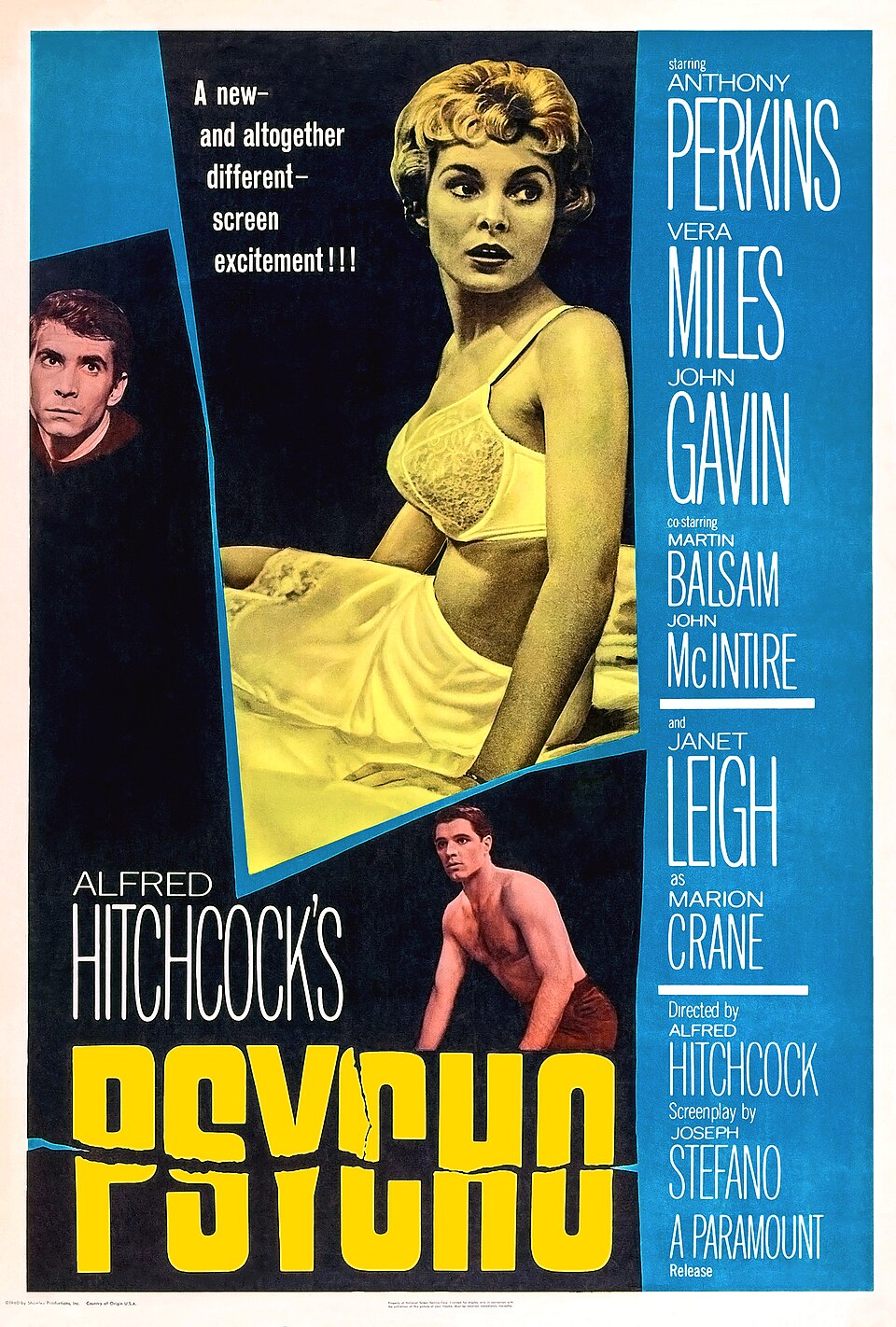

Psycho
After stealing money, Marion Crane stays at an isolated motel run by Norman Bates. Her disappearance brings other people into the mystery.
- Directed or created by
- Alfred Hitchcock
- Content notes
- Theft and disappearance at an isolated motel.
Why this work matters for psychology
The suspense story provides a starting point for discussing judgment and the history of psychological labels in popular culture.
Psychological connections
Screen stories illustrate how psychological processes look and feel in narrative form; they are not empirical proof or clinical case studies.
Historical psychological labels
Robert Genter's article examines how Psycho relates to Cold War ideas about the psychopath. What assumptions does such a historical label carry, and what evidence would a contemporary assessment require?
Suspense and shifting perspective
How does introducing a theft affect the judgments viewers make as the mystery develops? Separate information supplied by the story from assumptions about a character's motives.
Portrayal and accuracy limitations
- Historical discussion of psychological labels does not establish a diagnosis or show that a film causes stigma. The linked scholarship was inspected at abstract scope only.
Questions to watch for
- 1. How does Marion Crane's theft shape your expectations before she reaches the motel?
- 2. What is the difference between a historical cultural label and the evidence needed for a clinical assessment?
In the Psy101 course
Use Section 12.5 as a conceptual vocabulary for asking whether cultural portrayals invite stereotyping. Genter's historical article discusses this film at the abstract scope stated in its reading note.
- OpenStax Psychology 2e, section 12.5: Prejudice and Discrimination
- OpenStax Psychology 2e, Ch. 12: Social Psychology
Textbook links show where these concepts sit in an introductory course; they do not study this screen work. See the full topics and course map.
Companion readings and work source
Readings labeled as conceptual companions or contextual references study the psychological topic rather than this screen work.
- [1]Entertainment, U. P. H. (n.d.). Universal pictures home entertainment official catalog: Psycho. https://www.universalpicturesathome.com/movies/psycho-1960Checked 2026-10-23.Release or archive checkedSelected official synopsis, credits, or catalog details checked; this does not imply a full viewing.
- [3]Genter, R. (2010). “we all go a little mad sometimes”: Alfred hitchcock, American psychoanalysis, and the construction of the Cold War psychopath. Canadian Review of American Studies, 40(2), 133–162. https://doi.org/10.3138/cras.40.2.133Consulted source(Peer-reviewed or academic book · Abstract or publisher summary read · Checked 2026-10-23).Studies This WorkDirect commentary or scholarship: this publication specifically discusses or evaluates this screen work.The abstract places Psycho in historical discussions of political and sexual deviance, adolescence, and family relations during the Cold War. This is cultural history, not a clinical diagnosis.Note: Official PubMed indexed abstract and bibliographic metadata inspected; direct PubMed returned a thin notice and the publisher page could not be opened. Article full text was not read.
- [2]Spielman, R. M., Jenkins, W. J., & Lovett, M. D. (2020). Psychology 2e. OpenStax. https://openstax.org/books/psychology-2e/pages/12-5-prejudice-and-discrimination(OpenStax course textbook · Full-text passages checked · Checked 2026-10-23).Conceptual Companion (Does Not Study This Work)Conceptual companion: does not study this work. It investigates the underlying psychological construct or textbook topic.Provides vocabulary for asking how a cultural portrayal may invite stereotyping. This conceptual companion does not study Psycho or establish an effect on its viewers.Note: Full rendered OpenStax section prose inspected; conceptual companion only, does not study this film.