Back to the directoryFind in the timeline
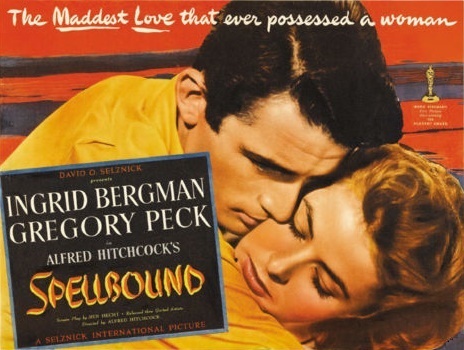

Spellbound
A psychiatrist becomes personally involved with a man whose uncertain identity and memory loss are part of a crime mystery.
- Directed or created by
- Alfred Hitchcock
- Content notes
- Memory and identity uncertainty within a crime mystery.
Why this work matters for psychology
Its mystery makes psychological explanation part of the plot and raises questions about professional boundaries.
Psychological connections
Screen stories illustrate how psychological processes look and feel in narrative form; they are not empirical proof or clinical case studies.
Memory within a mystery
How does uncertainty about identity affect what counts as evidence in a crime mystery? The story does not establish how real memory disorders work.
Overlapping professional and personal roles
The romantic relationship involving a psychiatrist invites questions about perspective and professional boundaries, without presenting a model of therapeutic practice.
Portrayal and accuracy limitations
- The romantic relationship and memory mystery do not establish clinical evidence or a model for therapeutic practice.
Questions to watch for
- 1. How does uncertainty about memory affect your interpretation of evidence in a mystery?
- 2. What questions does the relationship raise about professional and personal roles?
In the Psy101 course
Contrasts 1940s Hollywood psychoanalysis and amnesia tropes with OpenStax sections on how memory functions (8.1) and psychotherapy orientations (16.2).
- OpenStax Psychology 2e, section 8.1: How Memory Functions
- OpenStax Psychology 2e, section 16.2: Types of Treatment
- OpenStax Psychology 2e, Ch. 8: Memory
- OpenStax Psychology 2e, Ch. 16: Therapy and Treatment
Textbook links show where these concepts sit in an introductory course; they do not study this screen work. See the full topics and course map.
Companion readings and work source
Readings labeled as conceptual companions or contextual references study the psychological topic rather than this screen work.
- [1](TCM), T. C. M. (1945a). Turner classic movies (TCM) official catalog: Spellbound. https://www.tcm.com/watchtcm/titles/91049Checked 2026-10-23.Release or archive checkedSelected official synopsis, credits, or catalog details checked; this does not imply a full viewing.
- [2]Spielman, R. M., Jenkins, W. J., & Lovett, M. D. (2020). Psychology 2e. OpenStax. https://openstax.org/books/psychology-2e/pages/16-2-types-of-treatment(OpenStax course textbook · Selected passages checked · Checked 2026-10-23).Conceptual Companion (Does Not Study This Work)Conceptual companion: does not study this work. It investigates the underlying psychological construct or textbook topic.Overviews psychodynamic and contemporary psychotherapy approaches as a factual benchmark against mid-century cinema tropes.Note: Official OpenStax section headings and relevant paragraphs inspected; conceptual companion only, does not study this film.