Back to the directoryFind in the timeline
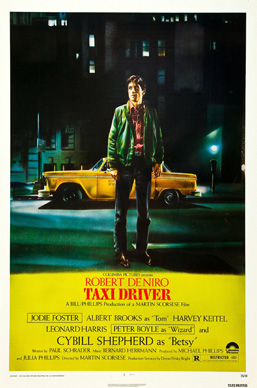

Taxi Driver
A New York City cab driver struggles with loneliness and desperation that escalate toward violence. The story invites discussion of social isolation, emotion and the assumptions viewers make about a character’s behavior.
- Directed or created by
- Martin Scorsese
- Content notes
- Loneliness Urban isolation Escalating violence
Why this work matters for psychology
The premise invites questions about isolation, urban life, and how a story signals danger, while asking students to notice how promotional language can label a character rather than explain him.
Psychological connections
Screen stories illustrate how psychological processes look and feel in narrative form; they are not empirical proof or clinical case studies.
Loneliness and escalation
Ask how the synopsis links loneliness to a turn toward violence and what that linkage leaves unexplained.
Labels in promotional copy
The official text uses a stigmatizing adjective; consider how such wording shapes viewers' expectations before they see a single scene.
Portrayal and accuracy limitations
- Promotional copy's stigmatizing adjective is excluded from clinical characterization; the packet offers no diagnostic basis.
Questions to watch for
- 1. How does the synopsis describe the cab driver's isolation, and what does that framing emphasize?
- 2. What might viewers assume from a promotional label before encountering the story itself?
In the Psy101 course
Use the linked textbook concepts as questions for interpreting the premise, rather than as evidence validating its portrayal.
- OpenStax Psychology 2e, section 10.4: Emotion
- OpenStax Psychology 2e, section 12.1: What Is Social Psychology?
- OpenStax Psychology 2e, Ch. 10: Motivation and Emotion
- OpenStax Psychology 2e, Ch. 12: Social Psychology
Textbook links show where these concepts sit in an introductory course; they do not study this screen work. See the full topics and course map.
Companion readings and work source
Readings labeled as conceptual companions or contextual references study the psychological topic rather than this screen work.
- [1]Industries, S. P. E. / C. P. & Inc. (n.d.-c). TAXI DRIVER | sony pictures entertainment. https://www.sonypictures.com/movies/taxidriverChecked 2026-10-23.Release or archive checkedSelected official synopsis and catalog details inspected; full work not viewed.
- [2]Spielman, R. M., Jenkins, W. J., & Lovett, M. D. (2020). Psychology 2e. OpenStax. https://openstax.org/books/psychology-2e/pages/12-1-what-is-social-psychology(OpenStax course textbook · Full-text passages checked · Checked 2026-10-23).Conceptual Companion (Does Not Study This Work)Conceptual companion: does not study this work. It investigates the underlying psychological construct or textbook topic.Situational versus dispositional explanation and attribution at full-text scope; does not study the film.Note: Selected textbook material inspected at the stated access scope. Conceptual companion; it does not study or validate this screen work.
- [3]Spielman, R. M., Jenkins, W. J., & Lovett, M. D. (2020). Psychology 2e. OpenStax. https://openstax.org/books/psychology-2e/pages/10-4-emotion(OpenStax course textbook · Selected passages checked · Checked 2026-10-23).Conceptual Companion (Does Not Study This Work)Conceptual companion: does not study this work. It investigates the underlying psychological construct or textbook topic.Components of emotion at excerpt scope; conceptual companion only.Note: Selected textbook material inspected at the stated access scope. Conceptual companion; it does not study or validate this screen work.