Back to the directoryFind in the timeline
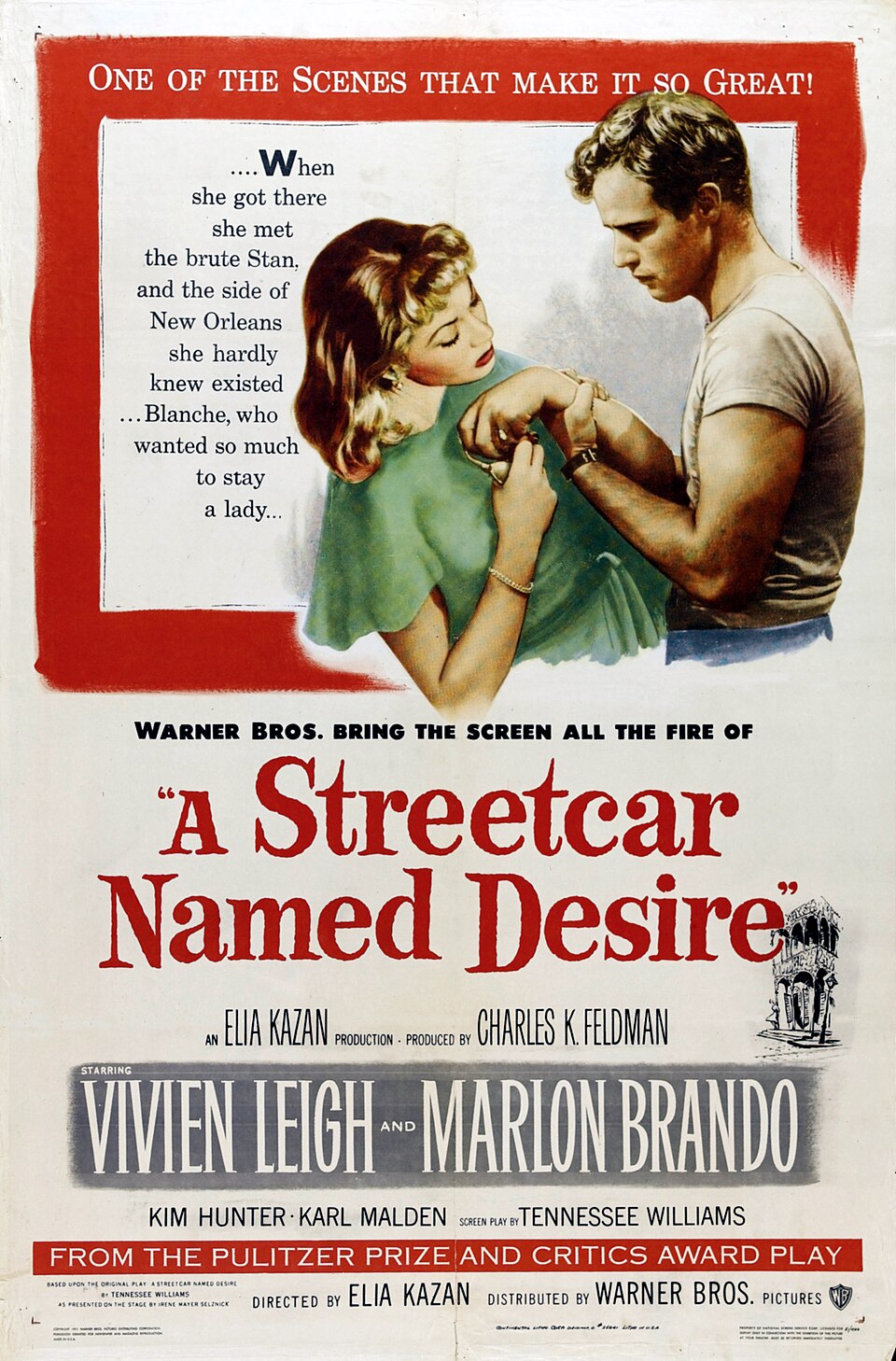

A Streetcar Named Desire
Blanche DuBois arrives in New Orleans to stay with her sister, Stella. Tension grows between Blanche and Stella's husband, Stanley.
- Directed or created by
- Elia Kazan
- Content notes
- Conflict between family members and within a shared household.
Why this work matters for psychology
The household conflict invites discussion of family relationships, social expectations, and distress.
Psychological connections
Screen stories illustrate how psychological processes look and feel in narrative form; they are not empirical proof or clinical case studies.
Self-presentation and interpretation
What do viewers learn about Blanche from her own presentation, and what comes from the judgments of other family members?
Household conflict
The conflict between Blanche and Stanley invites questions about competing loyalties within a family. What evidence supports each character's interpretation?
Portrayal and accuracy limitations
- This 1950s drama reflects its historical setting. Reading the characters retrospectively does not establish a clinical diagnosis.
Questions to watch for
- 1. How do Blanche, Stella, and Stanley interpret the conflict differently?
- 2. What questions would you ask before interpreting a character's coping or emotional state?
In the Psy101 course
Pairs the drama's emotional conflict with OpenStax Section 10.4 (Emotion) and Chapter 14 (Stress, Lifestyle, and Health).
- OpenStax Psychology 2e, section 10.4: Emotion
- OpenStax Psychology 2e, section 14.4: Regulation of Stress
- OpenStax Psychology 2e, Ch. 10: Motivation and Emotion
- OpenStax Psychology 2e, Ch. 14: Stress, Lifestyle, and Health
Textbook links show where these concepts sit in an introductory course; they do not study this screen work. See the full topics and course map.
Companion readings and work source
Readings labeled as conceptual companions or contextual references study the psychological topic rather than this screen work.
- [1](TCM), T. C. M. (1951). Turner classic movies (TCM) official catalog: A streetcar named desire. https://www.tcm.com/watchtcm/titles/16434Checked 2026-10-23.Release or archive checkedSelected official synopsis, credits, or catalog details checked; this does not imply a full viewing.
- [2]Spielman, R. M., Jenkins, W. J., & Lovett, M. D. (2020). Psychology 2e. OpenStax. https://openstax.org/books/psychology-2e/pages/14-4-regulation-of-stress(OpenStax course textbook · Selected passages checked · Checked 2026-10-23).Conceptual Companion (Does Not Study This Work)Conceptual companion: does not study this work. It investigates the underlying psychological construct or textbook topic.Introduces coping approaches, perceived control, social support and stress regulation. It includes discussion of learned helplessness and student stress. These concepts can frame viewing questions; a narrative is not evidence of a treatment’s effectiveness or a diagnosis of its characters.Note: Title, objectives, selected beginning/end paragraphs and section headings inspected; full section prose was retrieved, but no whole-section or whole-book read is claimed.
- [3]Spielman, R. M., Jenkins, W. J., & Lovett, M. D. (2020). Psychology 2e. OpenStax. https://openstax.org/books/psychology-2e/pages/10-4-emotion(OpenStax course textbook · Selected passages checked · Checked 2026-10-23).Conceptual Companion (Does Not Study This Work)Conceptual companion: does not study this work. It investigates the underlying psychological construct or textbook topic.Introduces subjective experience, expression, and cognitive appraisal of emotion.Note: Official OpenStax section headings and relevant paragraphs inspected; conceptual companion only, does not study this film.