Back to the directoryFind in the timeline
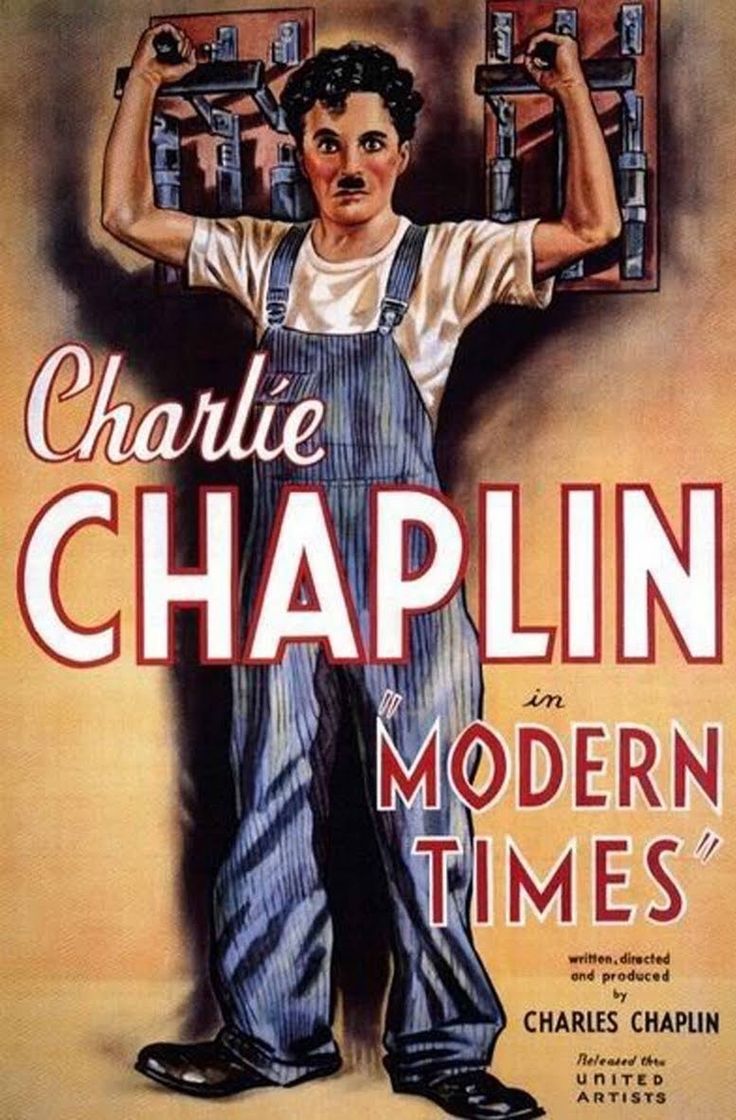

Modern Times
A factory worker played by Chaplin struggles with industrial routines and forms a relationship with a young woman. The comedy places work and class conflict in a Depression-era setting.
- Directed or created by
- Charles Chaplin
- Country and language
- United States · English
- Content notes
- Based on the official Criterion page text only: factory labor and Great Depression class-struggle themes. Not a full content review.
Why this work matters for psychology
By placing the Tramp inside mechanized factory work and Depression-era economic pressure, the film provides a classic starting point for discussing how workplace systems and social conditions relate to stress.
Psychological connections
Screen stories illustrate how psychological processes look and feel in narrative form; they are not empirical proof or clinical case studies.
Systems and workplace pressure
The factory and class-struggle framing invites discussion of how institutional settings and economic conditions shape behavior, without treating a comedic fiction as causal organizational data.
Comic response to strain
The premise of an overwhelmed factory worker opens questions about how humor and emotion are expressed under occupational strain, as an interpretive prompt rather than a clinical portrait.
Portrayal and accuracy limitations
- A comedic Depression-era fiction offers editorial prompts on work and strain, not a diagnostic or empirical workplace study.
- The Criterion catalogue notes that the 87-minute film contains moments of synchronized sound and song alongside silent pantomime.
Questions to watch for
- 1. How does the factory environment shape the character's behavior and choices?
- 2. What role does humor play when characters confront economic and institutional pressure?
In the Psy101 course
Pair the factory-work premise with Section 13.4 (Human Factors Psychology and Workplace Design); this textbook section is a conceptual companion and does not analyze the film.
- OpenStax Psychology 2e, section 13.4: Human Factors Psychology and Workplace Design
- OpenStax Psychology 2e, Ch. 13: Industrial-Organizational Psychology
Textbook links show where these concepts sit in an introductory course; they do not study this screen work. See the full topics and course map.
Companion readings and work source
Readings labeled as conceptual companions or contextual references study the psychological topic rather than this screen work.
- [1]Collection, T. C. (1936). The criterion collection: Modern times. https://www.criterion.com/films/27526-modern-timesChecked 2026-10-23.Release or archive checkedSelected official synopsis, credits, or catalog details checked; this does not imply a full viewing.
- [2]Spielman, R. M., Jenkins, W. J., & Lovett, M. D. (2020). Psychology 2e. OpenStax. https://openstax.org/books/psychology-2e/pages/13-4-human-factors-psychology-and-workplace-design(OpenStax course textbook · Full-text passages checked · Checked 2026-10-23).Conceptual Companion (Does Not Study This Work)Conceptual companion: does not study this work. It investigates the underlying psychological construct or textbook topic.Explains human factors as the design of work, equipment and information around human capabilities. It discusses safety, checklists, attention and cognitive workload. This offers a conceptual comparison for industrial or technological narratives without proving that a fictional breakdown is a clinical phenomenon.Note: Full retrieved section prose inspected. Images, linked media and underlying cited studies not independently inspected; no whole-book reading claimed.