Back to the directoryFind in the timeline
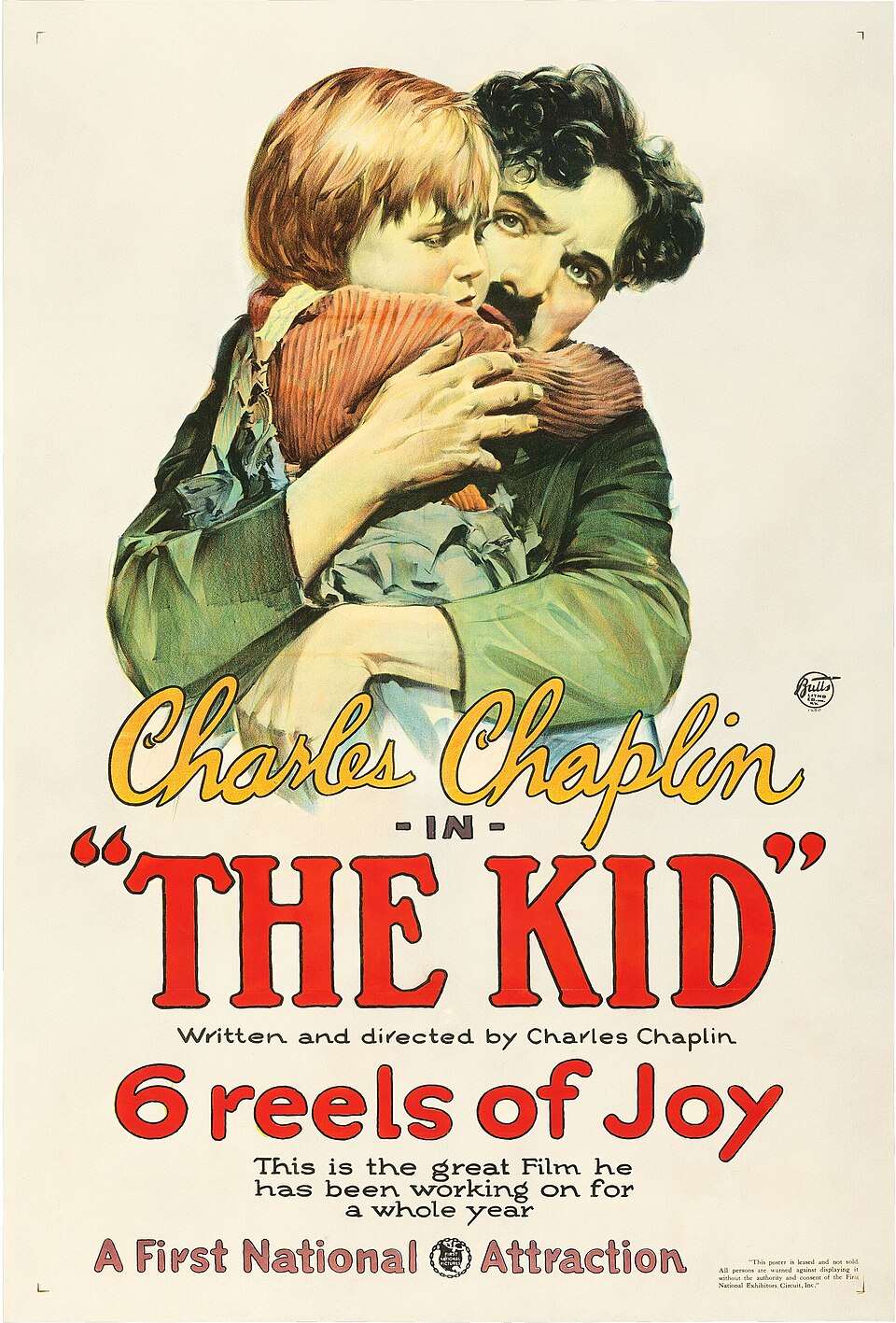

The Kid
A rescuer raises an orphan he finds in the streets, with the Tramp character at the center of an early Chaplin feature presented in a restored rerelease edition.
- Directed or created by
- Charles Chaplin
- Country and language
- United States · English
- Content notes
- Based on the official Criterion page text only: street orphan rescue and caretaking premise. Not a full content review.
Why this work matters for psychology
The story centers on an informal caretaking bond between a rescuer and an orphaned child, offering an accessible starting point for asking how early caregiving relationships are framed in cinema.
Psychological connections
Screen stories illustrate how psychological processes look and feel in narrative form; they are not empirical proof or clinical case studies.
Caregiving and early development
The premise invites discussion of how responsive caregiving and stable relationships relate to a child's upbringing, while keeping in mind that a fictional silent-era story does not establish developmental outcomes.
Attachment and belonging
The rescue and raising premise opens questions about how bonds form between a caretaker and a child, without assuming the film depicts a clinical attachment classification or measured effect.
Portrayal and accuracy limitations
- A fictional silent-era rescue premise offers an editorial discussion prompt rather than developmental or clinical evidence.
- Edition note: the 53-minute runtime listed on the Criterion source reflects Charlie Chaplin's 1972 rerelease version rather than the original 1921 theatrical cut.
Questions to watch for
- 1. How does the story frame caretaking and belonging between the Tramp and the child?
- 2. What questions would you want to ask about physical, cognitive, and social context when discussing a fictional childhood story?
In the Psy101 course
Pairs the film's caregiving premise with OpenStax Section 9.1 on physical, cognitive, and psychosocial domains of lifespan development; the textbook section is a conceptual companion and does not analyze this film.
- OpenStax Psychology 2e, section 9.1: What Is Lifespan Development?
- OpenStax Psychology 2e, section 9.3: Stages of Development
- OpenStax Psychology 2e, Ch. 9: Lifespan Development
Textbook links show where these concepts sit in an introductory course; they do not study this screen work. See the full topics and course map.
Companion readings and work source
Readings labeled as conceptual companions or contextual references study the psychological topic rather than this screen work.
- [1]Collection, T. C. (1921). The criterion collection: The kid. https://www.criterion.com/films/27566-the-kidChecked 2026-10-23.Release or archive checkedSelected official synopsis, credits, or catalog details checked; this does not imply a full viewing.
- [4]Bowlby, J. (1969). Attachment and loss: Vol. 1. attachment. Hogarth Press and the Institute of Psycho-Analysis.Consulted source(Peer-reviewed or academic book · Bibliographic catalog record checked · Checked 2026-10-23).Conceptual Companion (Does Not Study This Work)Conceptual companion: does not study this work. It investigates the underlying psychological construct or textbook topic.A historical attachment-theory companion for questions about early caregiving and separation; it does not study this screen work.Note: Wellcome library catalogue metadata, contents, and publication information opened; not a full-book reading and not current clinical guidance.
- [2]Spielman, R. M., Jenkins, W. J., & Lovett, M. D. (2020). Psychology 2e. OpenStax. https://openstax.org/books/psychology-2e/pages/9-1-what-is-lifespan-development(OpenStax course textbook · Selected passages checked · Checked 2026-10-23).Conceptual Companion (Does Not Study This Work)Conceptual companion: does not study this work. It investigates the underlying psychological construct or textbook topic.Introduces physical, cognitive, and psychosocial developmental domains and normative milestones across the lifespan.Note: Opening paragraphs and objectives through developmental domains, methods, and normative milestones inspected (partial-section inspection); does not study this film.
- [3]Spielman, R. M., Jenkins, W. J., & Lovett, M. D. (2020). Psychology 2e. OpenStax. https://openstax.org/books/psychology-2e/pages/9-3-stages-of-development(OpenStax course textbook · Selected passages checked · Checked 2026-10-23).Conceptual Companion (Does Not Study This Work)Conceptual companion: does not study this work. It investigates the underlying psychological construct or textbook topic.Surveys physical, cognitive and psychosocial development from prenatal life through adulthood. Its headings include attachment, self-concept and social relationships. These are broad contextual connections; the selected passages do not establish a character’s attachment classification or an inevitable developmental course.Note: Title, objectives, selected beginning/end paragraphs and section headings inspected; full section prose was retrieved, but no whole-section or whole-book read is claimed.