Back to the directoryFind in the timeline
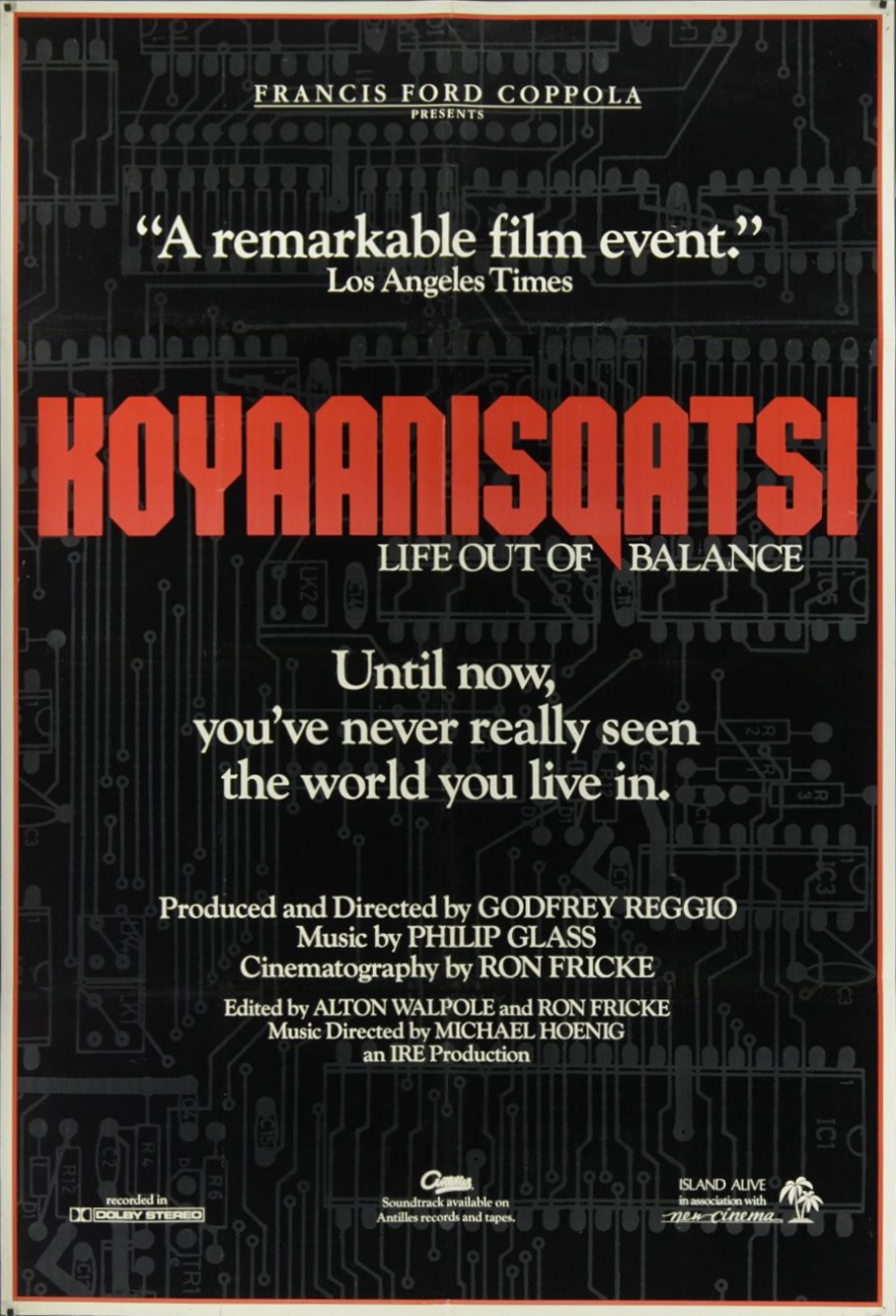

Koyaanisqatsi
Using a sequence of images and time-lapse photography, the film contrasts natural settings with technology-dependent life in the Northern Hemisphere.
- Directed or created by
- Godfrey Reggio
- Country and language
- United States · No spoken dialogue
- Content notes
- Based on the inspected Criterion and TCM synopses only: rapid time-lapse photography and industrial/environmental imagery. Not a full content review.
Why this work matters for psychology
Without narration or dialogue, the documentary invites discussion of how visual pacing, time-lapse photography, and juxtaposition guide attention and frame human-environment relationships.
Psychological connections
Screen stories illustrate how psychological processes look and feel in narrative form; they are not empirical proof or clinical case studies.
Visual sequencing and attention
The wordless collage and time-lapse photography invite questions about how pacing and visual juxtaposition steer what viewers notice and how they group rapid visual patterns.
Framing technology and built environments
Contrasting untouched landscapes with dense technological routines offers a prompt for discussing how visual media frame shared narratives about modern life.
Portrayal and accuracy limitations
- An artistic non-narrative documentary collage; its visual contrasts are an aesthetic meditation rather than empirical environmental or perceptual psychology research.
- Release date convention note: the official Criterion Collection distributor page lists 1983, whereas the Turner Classic Movies (TCM) broadcaster catalogue lists 1982. This profile uses Criterion's 1983 distributor release convention while noting the 1982 festival/catalogue convention.
Questions to watch for
- 1. What draws your attention first in sequences that rely on music and pacing rather than spoken narration?
- 2. How do juxtaposed shots of nature and industrial technology shape the meaning you assign to everyday urban routines?
In the Psy101 course
Pairs the documentary's wordless visual collage with OpenStax Section 5.3 (Vision) and Section 12.1 (What Is Social Psychology?) for discussing visual attention and situational framing.
- OpenStax Psychology 2e, section 5.3: Vision
- OpenStax Psychology 2e, section 12.1: What Is Social Psychology?
- OpenStax Psychology 2e, Ch. 5: Sensation and Perception
- OpenStax Psychology 2e, Ch. 12: Social Psychology
Textbook links show where these concepts sit in an introductory course; they do not study this screen work. See the full topics and course map.
Companion readings and work source
Readings labeled as conceptual companions or contextual references study the psychological topic rather than this screen work.
- [1]Movies, T. C. C. / T. C. (1983). The criterion collection and turner classic movies (TCM): Koyaanisqatsi. https://www.criterion.com/films/28034-koyaanisqatsiChecked 2026-10-23.Release or archive checkedSelected official synopsis, credits, or catalog details checked; this does not imply a full viewing.
- [2]Spielman, R. M., Jenkins, W. J., & Lovett, M. D. (2020). Psychology 2e. OpenStax. https://openstax.org/books/psychology-2e/pages/5-3-vision(OpenStax course textbook · Selected passages checked · Checked 2026-10-23).Conceptual Companion (Does Not Study This Work)Conceptual companion: does not study this work. It investigates the underlying psychological construct or textbook topic.Introduces the visual system, color processing and cues used in depth perception. Its discussion connects sensory anatomy with perceptual interpretation. This is background reading for visual experience, not evidence that an aesthetic film sequence accurately represents a neurological condition.Note: Title, objectives, selected beginning/end paragraphs and section headings inspected; full section prose was retrieved, but no whole-section or whole-book read is claimed.