Back to the directoryFind in the timeline
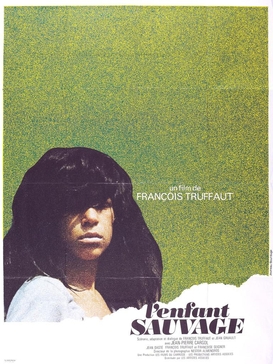

The Wild Child
Inspired by an incident in 1798, the drama follows a physician attempting to teach a boy who has grown up apart from ordinary social life.
- Directed or created by
- François Truffaut
- Country and language
- France
- Content notes
- Based on the official BFI programme extract only: a non-verbal child found living alone in a forest and a physician's educational project. Not a full content review.
Why this work matters for psychology
By dramatizing an eighteenth-century physician's effort to teach a child who grew up isolated from human society, the film raises foundational questions about developmental timing, language acquisition, and the assumptions educators bring to instruction.
Psychological connections
Screen stories illustrate how psychological processes look and feel in narrative form; they are not empirical proof or clinical case studies.
Instruction and developmental timing
What would count as progress in the physician's educational project, and how might expectations about development shape that judgment?
Language and communication outside typical environments
How can a teacher recognize communication when a learner's background differs greatly from the setting in which teaching takes place?
Portrayal and accuracy limitations
- The inspected source is a BFI Southbank screening programme note; the programme's community podcast partnership does not diagnose the historical child or establish clinical accuracy.
- Runtime (83 minutes) reflects the specific BFI digital screening listing.
Questions to watch for
- 1. Whose expectations define what counts as educational progress in the doctor's project?
- 2. How do caregivers and teachers frame a child's difference when socialization begins later in childhood?
In the Psy101 course
Pairs the film's premise with OpenStax Section 9.1 on physical, cognitive, and psychosocial domains of lifespan development; the textbook section is a conceptual companion and does not study this film.
- OpenStax Psychology 2e, section 9.1: What Is Lifespan Development?
- OpenStax Psychology 2e, Ch. 9: Lifespan Development
Textbook links show where these concepts sit in an introductory course; they do not study this screen work. See the full topics and course map.
Companion readings and work source
Readings labeled as conceptual companions or contextual references study the psychological topic rather than this screen work.
- [1]British Film Institute (BFI Southbank). (1970). BFI southbank programme: L’enfant sauvage (the wild child). https://whatson.bfi.org.uk/Online/default.asp?BOparam%3A%3AWScontent%3A%3AloadArticle%3A%3Apermalink=enfantsauvagerelaxedChecked 2026-10-23.Release or archive checkedSelected official synopsis, credits, or catalog details checked; this does not imply a full viewing.
- [2]Spielman, R. M., Jenkins, W. J., & Lovett, M. D. (2020). Psychology 2e. OpenStax. https://openstax.org/books/psychology-2e/pages/9-1-what-is-lifespan-development(OpenStax course textbook · Selected passages checked · Checked 2026-10-23).Conceptual Companion (Does Not Study This Work)Conceptual companion: does not study this work. It investigates the underlying psychological construct or textbook topic.Introduces developmental domains and normative milestones across childhood.Note: Opening paragraphs and objectives through developmental domains, methods, and normative milestones inspected (partial-section inspection); does not study this film.