Back to the directoryFind in the timeline
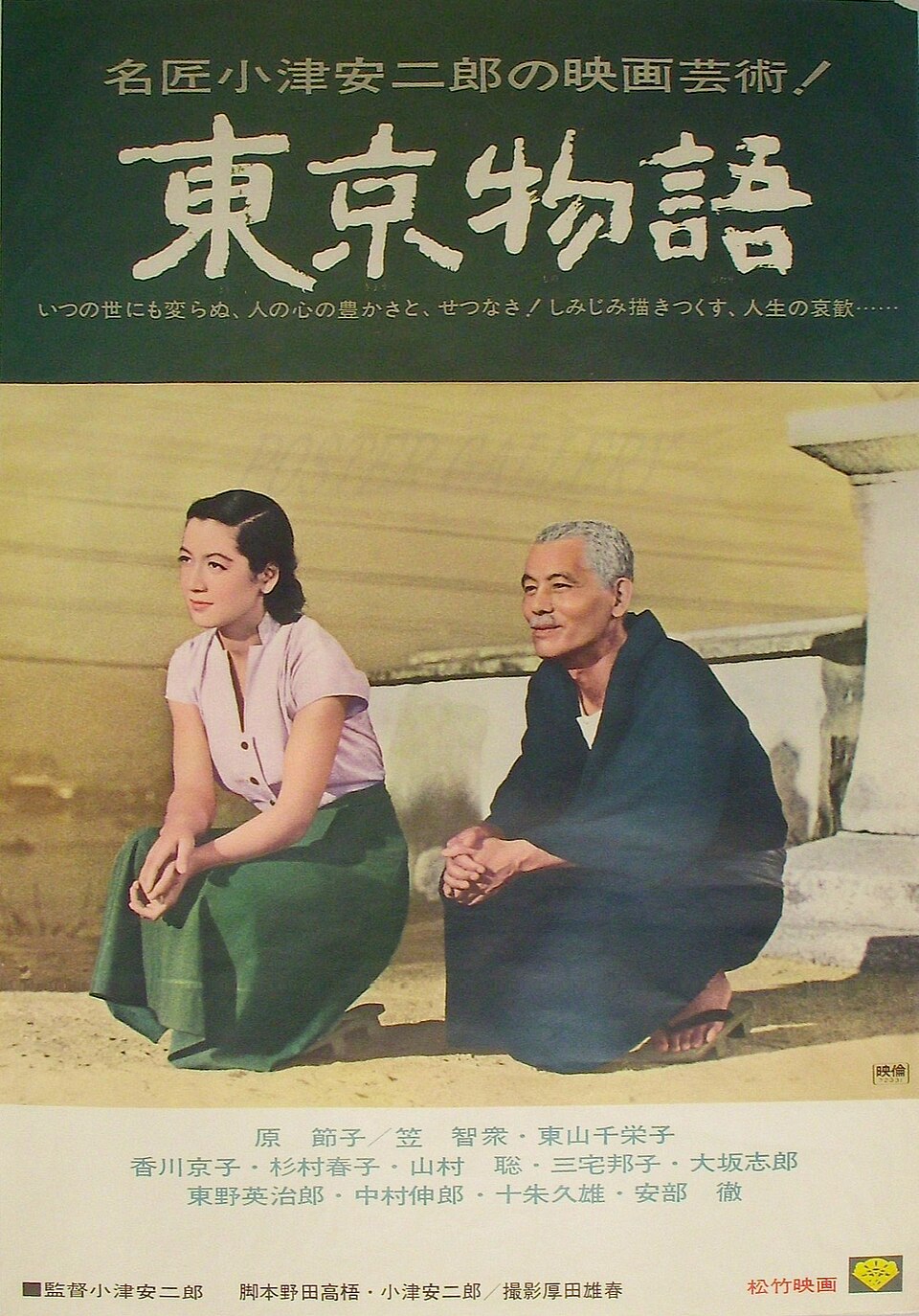

Tokyo Story
An aging couple travels from Onomichi to Tokyo to visit their adult children, who are absorbed in busy lives. Their widowed daughter-in-law offers them particular warmth, inviting questions about care, family expectations and aging.
- Directed or created by
- Yasujirō Ozu
- Content notes
- Aging, family disappointment, and serious illness.
Why this work matters for psychology
It invites questions about aging, family duty, and disappointment, and about how adult children and parents understand one another's needs.
Psychological connections
Screen stories illustrate how psychological processes look and feel in narrative form; they are not empirical proof or clinical case studies.
Family Attentiveness
The contrast between busy adult children and the attentive Noriko opens discussion about what kinds of care family members expect and offer.
Aging and Generational Change
The aging couple's visit raises questions about transitions in late life and shifting family roles.
Portrayal and accuracy limitations
- The inspected synopsis is a studio story summary; it should not be treated as a portrait of Japanese family life in general.
Questions to watch for
- 1. How does the visit reveal different expectations across generations?
- 2. What does the film ask about attentiveness and obligation?
In the Psy101 course
OpenStax Section 9.3 supplies psychosocial development and aging concepts; a teaching question is how family relationships across adulthood compare with textbook descriptions, without treating the film as evidence.
- OpenStax Psychology 2e, section 9.1: What Is Lifespan Development?
- OpenStax Psychology 2e, section 9.3: Stages of Development
- OpenStax Psychology 2e, Ch. 9: Lifespan Development
Textbook links show where these concepts sit in an introductory course; they do not study this screen work. See the full topics and course map.
Companion readings and work source
Readings labeled as conceptual companions or contextual references study the psychological topic rather than this screen work.
- [1]Co, S., & (松竹株式会社) Ltd. (n.d.). 東京物語 | 松竹・映画作品データベース. https://www.shochiku.co.jp/cinema/database/02815/Checked 2026-10-23.Release or archive checkedSelected official synopsis and catalog details inspected; full work not viewed.
- [2]Spielman, R. M., Jenkins, W. J., & Lovett, M. D. (2020). Psychology 2e. OpenStax. https://openstax.org/books/psychology-2e/pages/9-3-stages-of-development(OpenStax course textbook · Selected passages checked · Checked 2026-10-23).Conceptual Companion (Does Not Study This Work)Conceptual companion: does not study this work. It investigates the underlying psychological construct or textbook topic.Surveys psychosocial development and aging in family contexts; it does not study the film.Note: Selected textbook material inspected at the stated access scope. Conceptual companion; it does not study or validate this screen work.
- [3]Spielman, R. M., Jenkins, W. J., & Lovett, M. D. (2020). Psychology 2e. OpenStax. https://openstax.org/books/psychology-2e/pages/9-1-what-is-lifespan-development(OpenStax course textbook · Selected passages checked · Checked 2026-10-23).Conceptual Companion (Does Not Study This Work)Conceptual companion: does not study this work. It investigates the underlying psychological construct or textbook topic.Introduces lifespan development domains; it does not study the film.Note: Selected textbook material inspected at the stated access scope. Conceptual companion; it does not study or validate this screen work.