Back to the directoryFind in the timeline
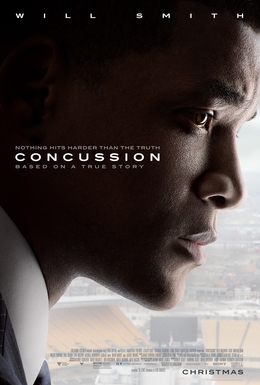

Concussion
Forensic neuropathologist Bennet Omalu investigates a professional football player’s brain trauma and faces institutional resistance when trying to make his findings known. The biographical drama invites questions about scientific evidence, professional responsibility and how a discovery reaches the public.
- Content notes
- Depiction of conflict over football-related brain trauma findings.
Why this work matters for psychology
It invites questions about how scientific claims meet institutional power, and about the difference between a dramatized discovery story and research evidence.
Psychological connections
Screen stories illustrate how psychological processes look and feel in narrative form; they are not empirical proof or clinical case studies.
Studying Brain Injury
The story centers on identification of a brain trauma, inviting discussion of how brain injury is described and studied, while keeping film drama distinct from research evidence.
Findings Under Pressure
The resistance Omalu faces raises open questions about professional responsibility when findings are contested.
Portrayal and accuracy limitations
- A dramatized feature cannot establish scientific validity of any depicted discovery process; the inspected synopsis is not a research record.
- The distributor frames the story as a discovery meeting institutional resistance. This promotional framing is not an independent assessment of the historical science.
Questions to watch for
- 1. What does the film ask about responsibility when scientific findings meet institutional interests?
- 2. How might dramatization shape how a discovery is understood?
In the Psy101 course
OpenStax Section 3.4 supplies introductory brain structure and imaging concepts; a teaching question is how classroom models of brain function compare with how a discovery story is dramatized, without treating the film as evidence of mechanism.
- OpenStax Psychology 2e, section 2.4: Ethics
- OpenStax Psychology 2e, section 3.4: The Brain and Spinal Cord
- OpenStax Psychology 2e, Ch. 2: Psychological Research
- OpenStax Psychology 2e, Ch. 3: Biopsychology
Textbook links show where these concepts sit in an introductory course; they do not study this screen work. See the full topics and course map.
Companion readings and work source
Readings labeled as conceptual companions or contextual references study the psychological topic rather than this screen work.
- [1]Industries, S. P. E. / C. P. & Inc. (n.d.-b). CONCUSSION | sony pictures entertainment. https://www.sonypictures.com/movies/concussionChecked 2026-10-23.Release or archive checkedSelected official synopsis and catalog details inspected; full work not viewed.
- [2]Spielman, R. M., Jenkins, W. J., & Lovett, M. D. (2020). Psychology 2e. OpenStax. https://openstax.org/books/psychology-2e/pages/3-4-the-brain-and-spinal-cord(OpenStax course textbook · Selected passages checked · Checked 2026-10-23).Conceptual Companion (Does Not Study This Work)Conceptual companion: does not study this work. It investigates the underlying psychological construct or textbook topic.Introduces brain structures and study of brain damage; it does not study the film.Note: Selected textbook material inspected at the stated access scope. Conceptual companion; it does not study or validate this screen work.
- [3]Spielman, R. M., Jenkins, W. J., & Lovett, M. D. (2020). Psychology 2e. OpenStax. https://openstax.org/books/psychology-2e/pages/2-4-ethics(OpenStax course textbook · Selected passages checked · Checked 2026-10-23).Conceptual Companion (Does Not Study This Work)Conceptual companion: does not study this work. It investigates the underlying psychological construct or textbook topic.Introduces human-participant protections and informed consent. A contrast point for discussing professional responsibility, rather than a source on contested findings.Note: Selected textbook material inspected at the stated access scope. Conceptual companion; it does not study or validate this screen work.