Back to the directoryFind in the timeline
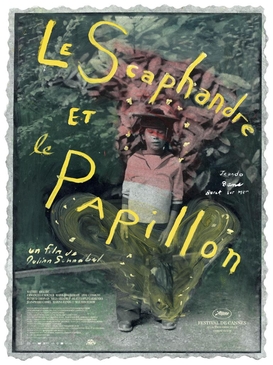

The Diving Bell and the Butterfly
Directed by Julian Schnabel and written by Ronald Harwood from Jean-Dominique Bauby's autobiography, this drama follows the story of the Elle editor who suffered a 1995 stroke that left him mute and nearly completely paralyzed, and who dictated his memoir by blinking his left eye.
- Directed or created by
- Julian Schnabel
- Country and language
- France, United States · French
- Content notes
- Stroke Severe paralysis Hospital or care setting
Why this work matters for psychology
The premise invites questions about communication without speech, the meaning of authorship, and how a story represents a life reshaped by severe paralysis.
Psychological connections
Screen stories illustrate how psychological processes look and feel in narrative form; they are not empirical proof or clinical case studies.
Injury and communication
Ask what the premise leaves open about the relationship between speech, movement, and communication after a stroke.
Authorship by blinking
Consider how dictating a memoir with a single blink reframes authorship and expression under severe constraint.
Portrayal and accuracy limitations
- The film adapts a memoir and uses dramatization. Its portrayal of paralysis and communication is not a clinical account or treatment guide.
Questions to watch for
- 1. How might someone communicate a life story with very limited movement?
- 2. What does the premise suggest about authorship when a narrative is dictated through another person's transcription?
In the Psy101 course
Inspected OpenStax section 3.4 (The Brain and Spinal Cord) covers introductory brain function, spinal-cord overview, neuroplasticity, and brain imaging at excerpt scope; it can frame questions about injury and plasticity but cannot evaluate this film's clinical depiction.
- OpenStax Psychology 2e, section 3.4: The Brain and Spinal Cord
- OpenStax Psychology 2e, section 8.1: How Memory Functions
- OpenStax Psychology 2e, Ch. 3: Biopsychology
- OpenStax Psychology 2e, Ch. 8: Memory
Textbook links show where these concepts sit in an introductory course; they do not study this screen work. See the full topics and course map.
Companion readings and work source
Readings labeled as conceptual companions or contextual references study the psychological topic rather than this screen work.
- [1]American Film Institute / Festival de Cannes. (n.d.). AFI catalog and cannes: The diving bell and the butterfly. https://catalog.afi.com/Catalog/moviedetails/55183Checked 2026-10-23.Release or archive checkedSelected official synopsis and catalog details inspected; full work not viewed.
- [2]Spielman, R. M., Jenkins, W. J., & Lovett, M. D. (2020). Psychology 2e. OpenStax. https://openstax.org/books/psychology-2e/pages/3-4-the-brain-and-spinal-cord(OpenStax course textbook · Selected passages checked · Checked 2026-10-23).Conceptual Companion (Does Not Study This Work)Conceptual companion: does not study this work. It investigates the underlying psychological construct or textbook topic.Introductory brain structure and plasticity at excerpt scope; does not study the film or confirm its depiction.Note: Selected textbook material inspected at the stated access scope. Conceptual companion; it does not study or validate this screen work.
- [3]Spielman, R. M., Jenkins, W. J., & Lovett, M. D. (2020). Psychology 2e. OpenStax. https://openstax.org/books/psychology-2e/pages/8-1-how-memory-functions(OpenStax course textbook · Selected passages checked · Checked 2026-10-23).Conceptual Companion (Does Not Study This Work)Conceptual companion: does not study this work. It investigates the underlying psychological construct or textbook topic.Memory encoding and retrieval at excerpt scope; conceptual vocabulary only.Note: Selected textbook material inspected at the stated access scope. Conceptual companion; it does not study or validate this screen work.