Back to the directoryFind in the timeline
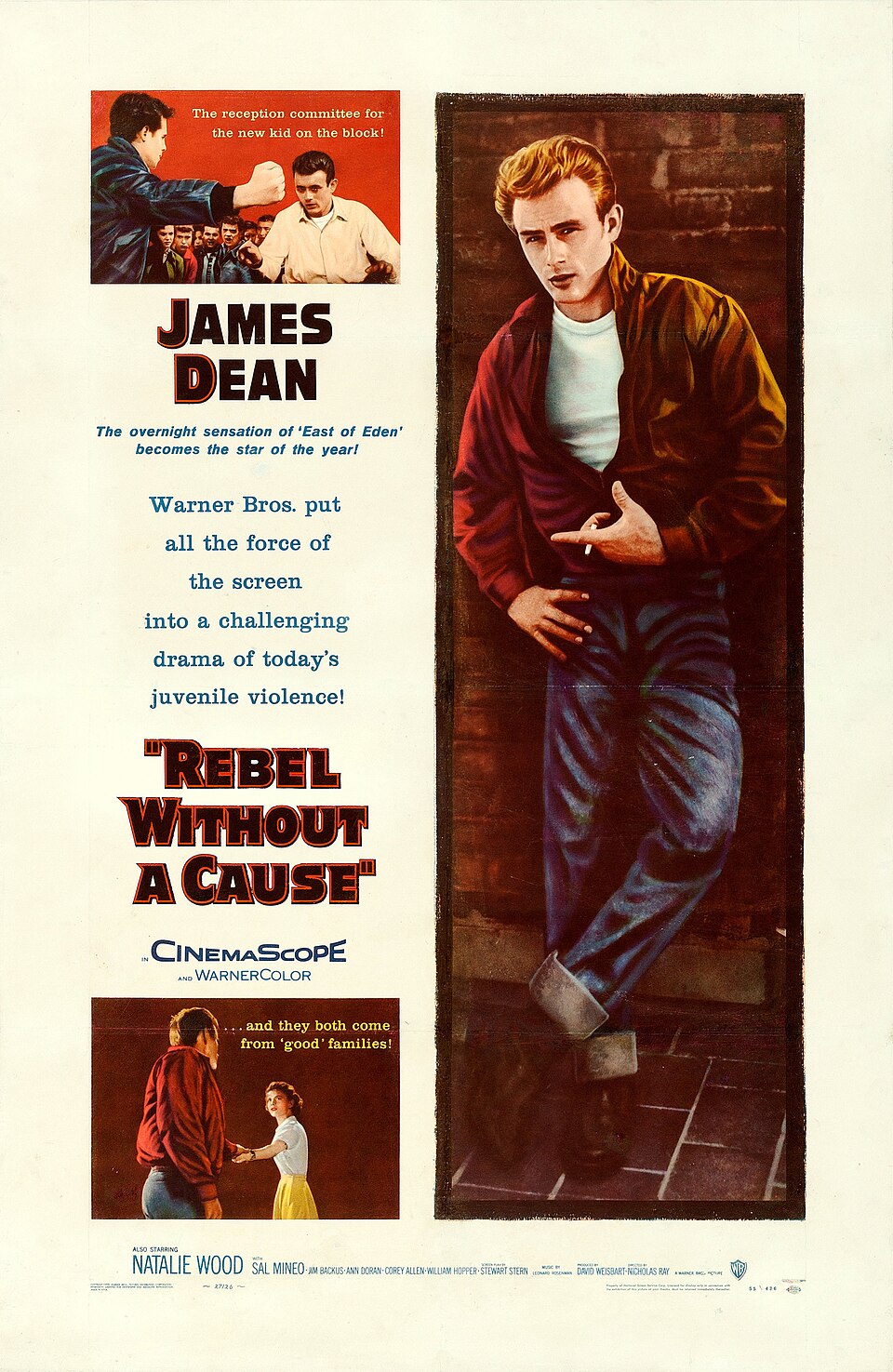

Rebel Without a Cause
Three teenagers navigate conflict with their families, peer expectations, and rebellion.
- Directed or created by
- Nicholas Ray
- Content notes
- Family and peer conflict involving teenagers.
Why this work matters for psychology
The story provides a way to discuss peer relationships, family conflict, and adolescent autonomy.
Psychological connections
Screen stories illustrate how psychological processes look and feel in narrative form; they are not empirical proof or clinical case studies.
Adolescent autonomy
The teenagers' family conflicts invite questions about autonomy and support without assuming every adolescent has the same experience.
Peer belonging
How does seeking acceptance from peers affect the choices available to the teenagers? Use the story to pose questions, rather than establish a universal developmental rule.
Portrayal and accuracy limitations
- The film reflects a particular 1950s setting. Its dramatic conflicts do not describe adolescence universally.
Questions to watch for
- 1. How does the film connect the teenagers' search for peer belonging with the tensions in their home lives?
- 2. How have cultural portrayals of adolescence changed since the 1950s, and what themes remain familiar?
In the Psy101 course
Pairs the film's portrait of adolescent development and peer pressure with OpenStax Section 9.1 (What Is Lifespan Development?) and Section 12.4 (Conformity, Compliance, and Obedience).
- OpenStax Psychology 2e, section 9.1: What Is Lifespan Development?
- OpenStax Psychology 2e, section 12.4: Conformity, Compliance, and Obedience
- OpenStax Psychology 2e, section 9.3: Stages of Development
- OpenStax Psychology 2e, Ch. 9: Lifespan Development
- OpenStax Psychology 2e, Ch. 12: Social Psychology
Textbook links show where these concepts sit in an introductory course; they do not study this screen work. See the full topics and course map.
Companion readings and work source
Readings labeled as conceptual companions or contextual references study the psychological topic rather than this screen work.
- [1](TCM), T. C. M. (1955). Turner classic movies (TCM) official catalog: Rebel without a cause. https://www.tcm.com/watchtcm/titles/16115Checked 2026-10-23.Reference catalog checkedCatalog details and an indexed synopsis checked; the full page was region restricted.
- [2]Spielman, R. M., Jenkins, W. J., & Lovett, M. D. (2020). Psychology 2e. OpenStax. https://openstax.org/books/psychology-2e/pages/9-3-stages-of-development(OpenStax course textbook · Selected passages checked · Checked 2026-10-23).Conceptual Companion (Does Not Study This Work)Conceptual companion: does not study this work. It investigates the underlying psychological construct or textbook topic.Surveys physical, cognitive and psychosocial development from prenatal life through adulthood. Its headings include attachment, self-concept and social relationships. These are broad contextual connections; the selected passages do not establish a character’s attachment classification or an inevitable developmental course.Note: Title, objectives, selected beginning/end paragraphs and section headings inspected; full section prose was retrieved, but no whole-section or whole-book read is claimed.
- [3]Spielman, R. M., Jenkins, W. J., & Lovett, M. D. (2020). Psychology 2e. OpenStax. https://openstax.org/books/psychology-2e/pages/9-1-what-is-lifespan-development(OpenStax course textbook · Selected passages checked · Checked 2026-10-23).Conceptual Companion (Does Not Study This Work)Conceptual companion: does not study this work. It investigates the underlying psychological construct or textbook topic.Introduces physical, cognitive, and psychosocial domains of lifespan development.Note: Opening paragraphs and objectives through developmental domains, methods, and normative milestones inspected (partial-section inspection); does not study this film.