Back to the directoryFind in the timeline
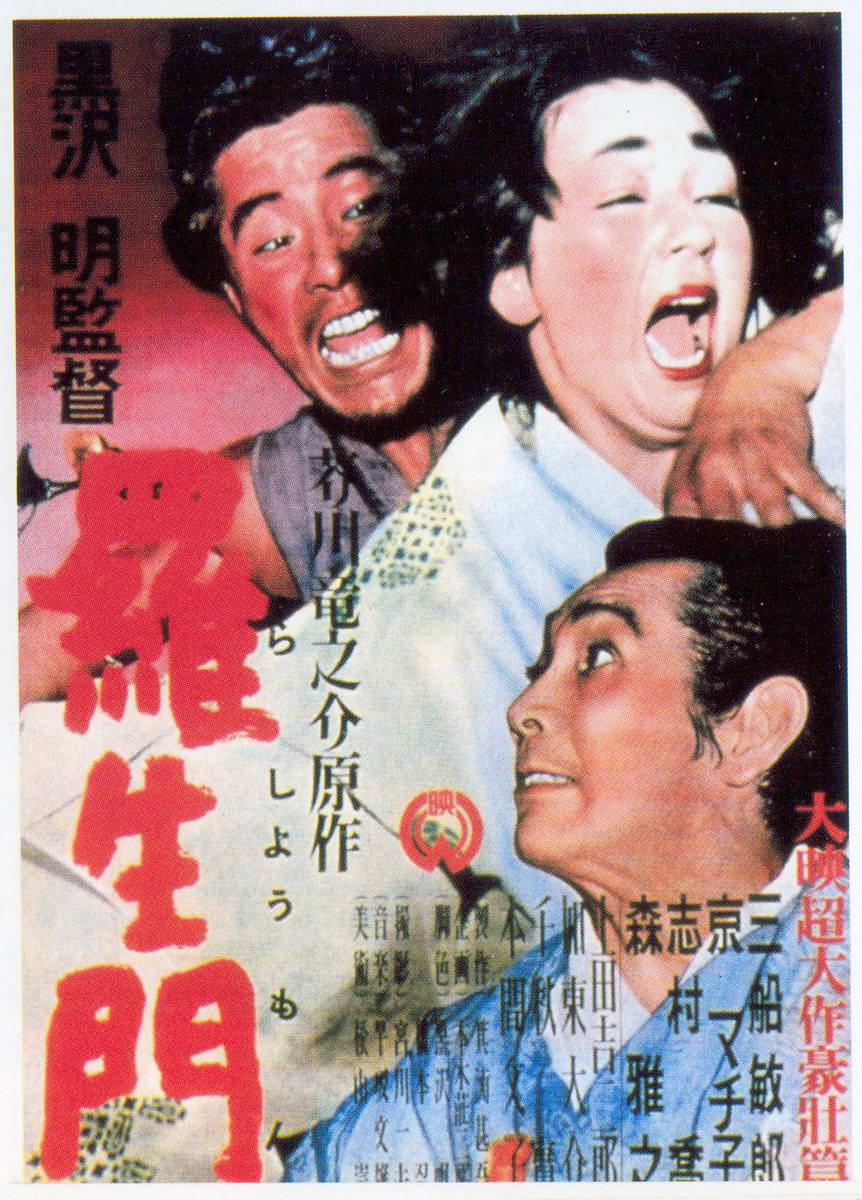

Rashomon
An encounter involving a samurai, his wife, and a thief ends in violence. At the later trial, four accounts of the incident diverge.
- Directed or created by
- Akira Kurosawa
- Content notes
- Based on the official KADOKAWA synopsis only: passion, violence, death, and a trial. Not a full content review.
Why this work matters for psychology
The differing accounts make the film a useful prompt for discussing testimony, perspective, and attribution.
Psychological connections
Screen stories illustrate how psychological processes look and feel in narrative form; they are not empirical proof or clinical case studies.
Competing recollections
Four divergent trial accounts invite discussion of how recollection and testimony can vary across speakers. As an editorial caution, conflicting dramatic narratives do not establish a clinical memory disorder or a laboratory finding on eyewitness accuracy.
Perspective and attribution
How might a speaker's situation influence the way an ambiguous event is described? Treat explanations such as self-serving attribution as questions to examine, rather than findings established by the drama.
Portrayal and accuracy limitations
- A philosophical drama of conflicting testimony offers an educational discussion prompt, not a clinical diagnosis of memory deficit or a controlled eyewitness study.
- Release convention note: KADOKAWA Global Cinema lists 1950 as the film's release year alongside a 1951 copyright notice on the international catalogue page.
Questions to watch for
- 1. What changes across the four recounted perspectives, and how might each speaker's situation shape their account?
- 2. How can concepts like dispositional versus situational attribution help you compare conflicting testimonies?
In the Psy101 course
Pairs the trial's four conflicting accounts with OpenStax Section 12.1 on situational versus dispositional attributions and self-serving bias; the textbook section is a conceptual companion and does not analyze this film.
- OpenStax Psychology 2e, section 8.3: Problems with Memory
- OpenStax Psychology 2e, section 12.1: What Is Social Psychology?
- OpenStax Psychology 2e, Ch. 8: Memory
- OpenStax Psychology 2e, Ch. 12: Social Psychology
Textbook links show where these concepts sit in an introductory course; they do not study this screen work. See the full topics and course map.
Companion readings and work source
Readings labeled as conceptual companions or contextual references study the psychological topic rather than this screen work.
- [1]KADOKAWA Corporation. (n.d.). KADOKAWA global cinema library: Rashomon. https://globalcinema.kadokawa.co.jp/library/entry-3393.htmlChecked 2026-10-23.Release or archive checkedSelected official synopsis, credits, or catalog details checked; this does not imply a full viewing.
- [4]Schacter, D. L. (1996). Searching for memory: The brain, the mind, and the past. Basic Books.Consulted source(Peer-reviewed or academic book · Bibliographic catalog record checked · Checked 2026-10-23).Conceptual Companion (Does Not Study This Work)Conceptual companion: does not study this work. It investigates the underlying psychological construct or textbook topic.A metadata-only scholarly book reference for considering memory as a topic. Its title and catalog contents informed this editorial pairing; the book was not read and does not study this screen work.Note: Author Harvard publication record and Wellcome first-edition catalogue/contents (https://wellcomecollection.org/works/mzv4xjxk) opened; book text not read.
- [2]Spielman, R. M., Jenkins, W. J., & Lovett, M. D. (2020). Psychology 2e. OpenStax. https://openstax.org/books/psychology-2e/pages/12-1-what-is-social-psychology(OpenStax course textbook · Full-text passages checked · Checked 2026-10-23).Conceptual Companion (Does Not Study This Work)Conceptual companion: does not study this work. It investigates the underlying psychological construct or textbook topic.Contrasts situational and dispositional explanations and discusses actor-observer and self-serving attribution biases.Note: Full rendered OpenStax section prose inspected; conceptual companion only, does not analyze or validate this screen work.
- [3]Spielman, R. M., Jenkins, W. J., & Lovett, M. D. (2020). Psychology 2e. OpenStax. https://openstax.org/books/psychology-2e/pages/8-3-problems-with-memory(OpenStax course textbook · Selected passages checked · Checked 2026-10-23).Conceptual Companion (Does Not Study This Work)Conceptual companion: does not study this work. It investigates the underlying psychological construct or textbook topic.Covers different forms of amnesia, eyewitness memory, suggestion, misinformation, forgetting and interference. These topics provide reading context for stories about uncertain recollection. The selected passages do not certify a film’s clinical accuracy or turn inconsistent testimony into a diagnosed memory disorder.Note: Title, objectives, selected beginning/end paragraphs and section headings inspected; full section prose was retrieved, but no whole-section or whole-book read is claimed.