Back to the directoryFind in the timeline
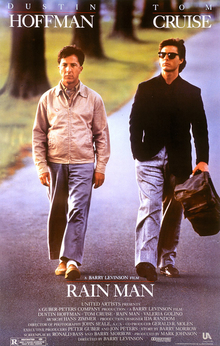

Rain Man
Directed by Barry Levinson, this 1988 drama follows a self-absorbed auto dealer who learns after his estranged father's death that a large estate has been placed in trust and discovers an older autistic brother, whom he takes on a cross-country car trip.
- Directed or created by
- Barry Levinson
- Country and language
- United States
- Content notes
- Institutional care, family loss, inheritance conflict, and an autistic character as described in the inspected sources
Why this work matters for psychology
What does the synopsis suggest about how siblings come to know one another? The film invites questions about portrayal and kinship, and about what popular stories may emphasize or omit.
Psychological connections
Screen stories illustrate how psychological processes look and feel in narrative form; they are not empirical proof or clinical case studies.
Brothers meeting late
The synopsis describes an unforeseen older brother and a shared journey; students can ask how a drama may frame late-forming kinship, treating the portrayal as fiction rather than a description of autistic experience.
A journey together
Because the synopsis describes a car trip that yields revelations about the brother and himself, a class can discuss what such a narrative structure may foreground about change in a relationship.
Portrayal and accuracy limitations
- The sources describe one fictional autistic character. This portrayal does not represent the range of autistic lives or establish clinical findings.
Questions to watch for
- 1. How might a long journey change how two siblings understand each other?
- 2. What might a popular portrayal emphasize or leave out about an autistic person's life?
In the Psy101 course
Use the linked textbook concepts as questions for interpreting the premise, rather than as evidence validating its portrayal.
- OpenStax Psychology 2e, section 7.4: What Are Intelligence and Creativity?
- OpenStax Psychology 2e, section 9.1: What Is Lifespan Development?
- OpenStax Psychology 2e, Ch. 7: Thinking and Intelligence
- OpenStax Psychology 2e, Ch. 9: Lifespan Development
Textbook links show where these concepts sit in an introductory course; they do not study this screen work. See the full topics and course map.
Companion readings and work source
Readings labeled as conceptual companions or contextual references study the psychological topic rather than this screen work.
- [1]BFI. (n.d.-b). Rain man (1988). https://www.bfi.org.uk/film/e466fe6a-f070-54ae-80c4-9e977a57fb03/rain-manChecked 2026-10-23.Release or archive checkedSelected official synopsis and catalog details inspected; full work not viewed.
- [2]Spielman, R. M., Jenkins, W. J., & Lovett, M. D. (2020). Psychology 2e. OpenStax. https://openstax.org/books/psychology-2e/pages/9-1-what-is-lifespan-development(OpenStax course textbook · Selected passages checked · Checked 2026-10-23).Conceptual Companion (Does Not Study This Work)Conceptual companion: does not study this work. It investigates the underlying psychological construct or textbook topic.Conceptual background on lifespan development; does not study the film.Note: Selected textbook material inspected at the stated access scope. Conceptual companion; it does not study or validate this screen work.
- [3]Spielman, R. M., Jenkins, W. J., & Lovett, M. D. (2020). Psychology 2e. OpenStax. https://openstax.org/books/psychology-2e/pages/7-4-what-are-intelligence-and-creativity(OpenStax course textbook · Selected passages checked · Checked 2026-10-23).Conceptual Companion (Does Not Study This Work)Conceptual companion: does not study this work. It investigates the underlying psychological construct or textbook topic.Conceptual background on intelligence and creativity; does not study the film.Note: Selected textbook material inspected at the stated access scope. Conceptual companion; it does not study or validate this screen work.