Back to the directoryFind in the timeline
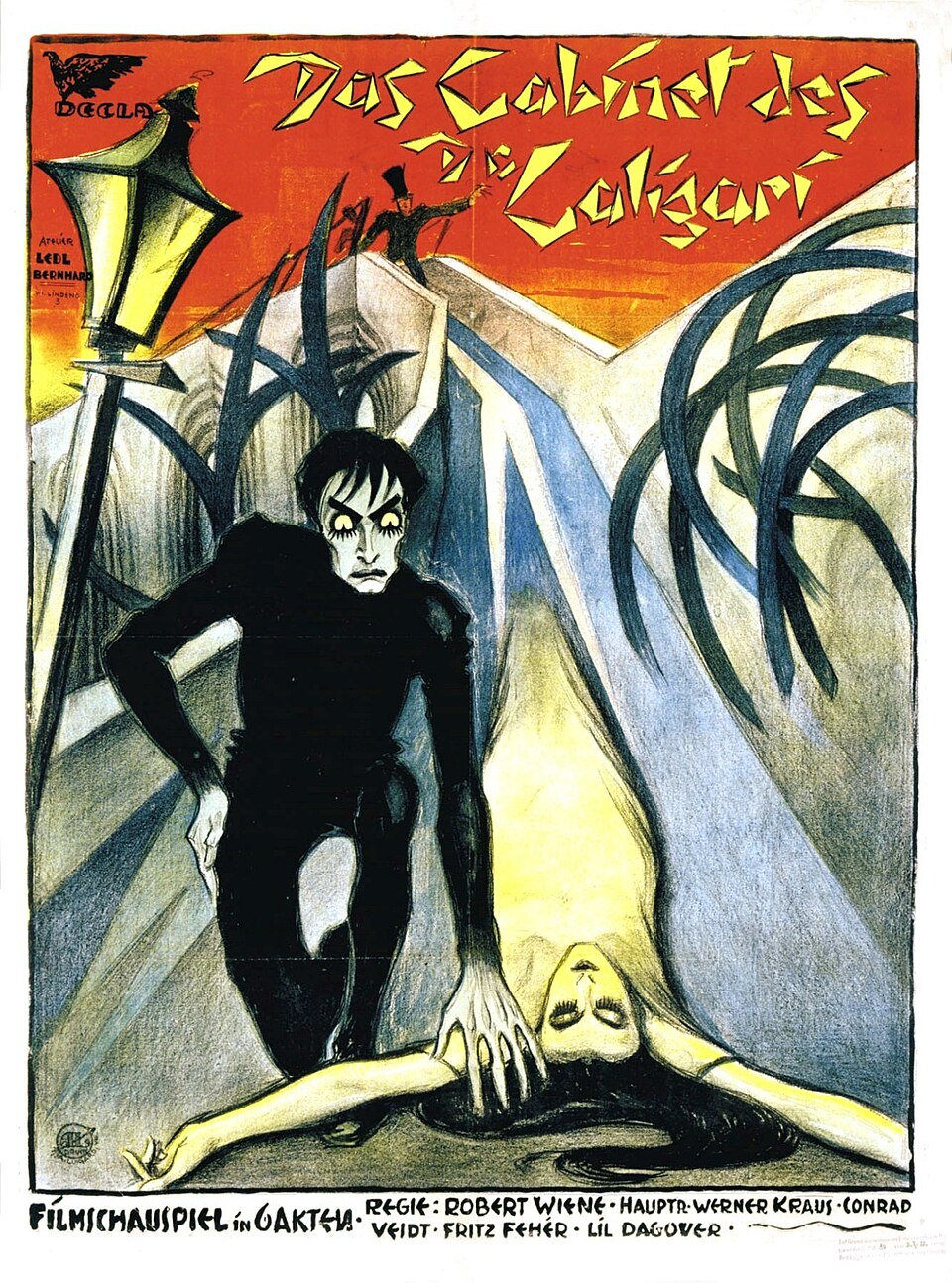

The Cabinet of Dr. Caligari
A carnival showman uses a sleepwalker to carry out murders.
- Directed or created by
- Robert Wiene
- Country and language
- Germany
- Content notes
- Murders involving a sleepwalker and a carnival showman.
Why this work matters for psychology
Its images and narration invite questions about how viewers decide whom to trust.
Psychological connections
Screen stories illustrate how psychological processes look and feel in narrative form; they are not empirical proof or clinical case studies.
Expressionist design and subjective experience
The film's stylized visual world invites viewers to ask how distorted sets and shadows convey subjective dread rather than objective reality, serving as an artistic prompt rather than perceptual data.
Hypnotic authority as a dramatic metaphor
The story uses hypnosis as a silent-horror plot device in which a carnival performer commands a sleepwalker, prompting discussion of how fiction dramatizes authority and suggestion.
Portrayal and accuracy limitations
- Hypnosis serves a horror story here. The film does not provide a modern clinical account of hypnosis or mental illness.
Questions to watch for
- 1. How does stylized visual design shape the way you interpret a narrator's account?
- 2. Why might a filmmaker use hypnosis as a metaphor for authority?
In the Psy101 course
Pairs the film's hypnotic-obedience metaphor with OpenStax Section 12.4 on obedience and social influence, while contrasting silent-era hypnosis tropes with Chapter 4 (States of Consciousness).
- OpenStax Psychology 2e, section 12.4: Conformity, Compliance, and Obedience
- OpenStax Psychology 2e, section 4.6: Other States of Consciousness
- OpenStax Psychology 2e, Ch. 4: States of Consciousness
- OpenStax Psychology 2e, Ch. 12: Social Psychology
Textbook links show where these concepts sit in an introductory course; they do not study this screen work. See the full topics and course map.
Companion readings and work source
Readings labeled as conceptual companions or contextual references study the psychological topic rather than this screen work.
- [1]BFI. (2020, February 25). 100 years of the cabinet of dr. caligari: Why we’re still living in its shadows. https://www.bfi.org.uk/features/100-years-cabinet-dr-caligariChecked 2026-10-23.Release or archive checkedOfficial BFI film criticism checked for story framing and visual design. The linked feature discusses the ending.
- [2]Spielman, R. M., Jenkins, W. J., & Lovett, M. D. (2020). Psychology 2e. OpenStax. https://openstax.org/books/psychology-2e/pages/4-6-other-states-of-consciousness(OpenStax course textbook · Full-text passages checked · Checked 2026-10-23).Conceptual Companion (Does Not Study This Work)Conceptual companion: does not study this work. It investigates the underlying psychological construct or textbook topic.Distinguishes hypnosis and meditation as attention-related experiences. It contrasts therapeutic settings with entertainment portrayals and presents dissociation and social-cognitive accounts of hypnosis. This supports a cautious comparison with screen hypnosis, without validating a film’s depiction or establishing a universal claim about personal will.Note: Full retrieved section prose inspected. Images, linked media and underlying cited studies not independently inspected; no whole-book reading claimed.
- [3]Spielman, R. M., Jenkins, W. J., & Lovett, M. D. (2020). Psychology 2e. OpenStax. https://openstax.org/books/psychology-2e/pages/12-4-conformity-compliance-and-obedience(OpenStax course textbook · Selected passages checked · Checked 2026-10-23).Conceptual Companion (Does Not Study This Work)Conceptual companion: does not study this work. It investigates the underlying psychological construct or textbook topic.Introduces compliance and obedience to authority as an empirical contrast to fictional mind-control tropes.Note: Official OpenStax section headings and relevant paragraphs inspected; conceptual companion only, does not study this film.