Back to the directoryFind in the timeline
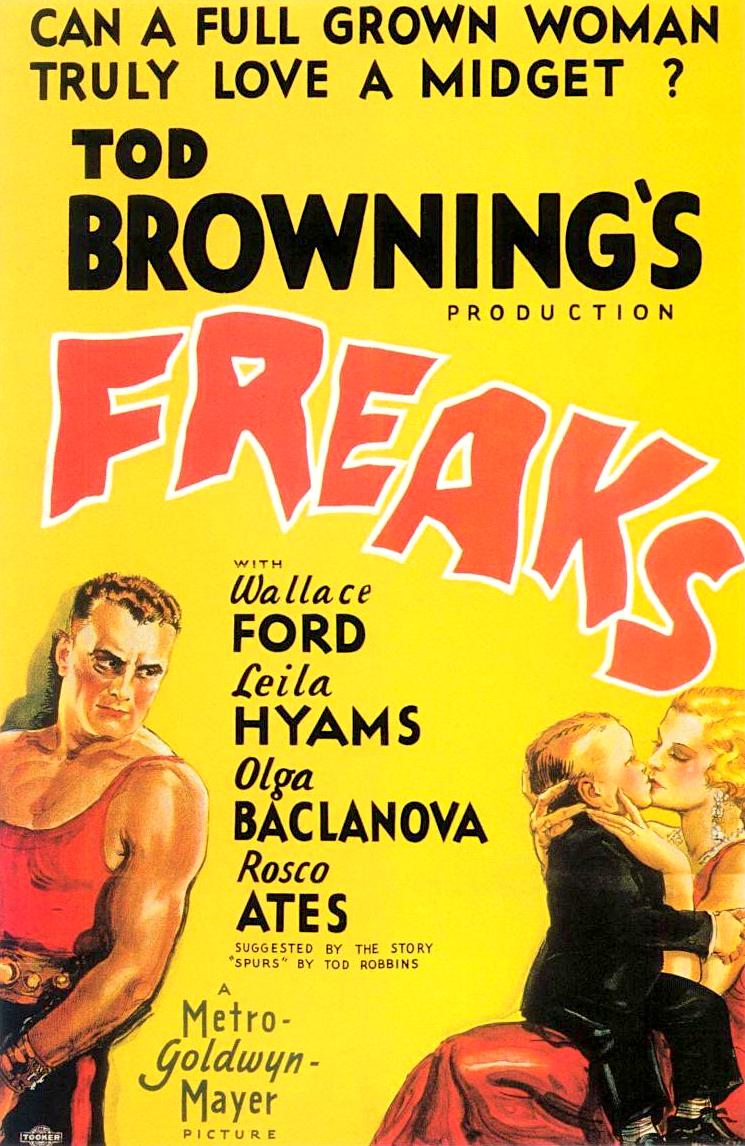

Freaks
A trapeze artist's scheme against her husband sets off conflict in a circus sideshow.
- Directed or created by
- Tod Browning
- Content notes
- A scheme against a spouse and conflict within a circus community.
Why this work matters for psychology
The film opens discussion of belonging, exclusion, and the representation of disability.
Psychological connections
Screen stories illustrate how psychological processes look and feel in narrative form; they are not empirical proof or clinical case studies.
Belonging and exclusion
How does the circus setting shape the groups viewers recognize, and how might a viewer's own assumptions influence judgments about the performers?
Trust within a relationship
The scheme against a spouse opens questions about trust and deception. Distinguish the actions established by the story from assumptions about motive.
Portrayal and accuracy limitations
- The title and historical publicity use language that can be dehumanizing. Discuss the people represented with respectful contemporary language.
Questions to watch for
- 1. How does the film position bodily difference, social exclusion, and audience judgment?
- 2. What shifts your perception of who is humane and who is exploitative among the characters?
In the Psy101 course
Pairs the film's portrayal of bodily difference, stigma, and group boundaries with OpenStax Section 12.5 (Prejudice and Discrimination); the textbook section is a conceptual companion and does not analyze this film.
- OpenStax Psychology 2e, section 12.5: Prejudice and Discrimination
- OpenStax Psychology 2e, Ch. 12: Social Psychology
Textbook links show where these concepts sit in an introductory course; they do not study this screen work. See the full topics and course map.
Companion readings and work source
Readings labeled as conceptual companions or contextual references study the psychological topic rather than this screen work.
- [1](TCM), T. C. M. (1932). Turner classic movies (TCM) official catalog: Freaks. https://www.tcm.com/watchtcm/titles/163Checked 2026-10-23.Reference catalog checkedCatalog details and an indexed synopsis checked; the full page was region restricted.
- [2]Spielman, R. M., Jenkins, W. J., & Lovett, M. D. (2020). Psychology 2e. OpenStax. https://openstax.org/books/psychology-2e/pages/12-5-prejudice-and-discrimination(OpenStax course textbook · Full-text passages checked · Checked 2026-10-23).Conceptual Companion (Does Not Study This Work)Conceptual companion: does not study this work. It investigates the underlying psychological construct or textbook topic.Distinguishes stereotypes, prejudice, and discrimination and provides vocabulary for examining how the film positions bodily difference and social exclusion.Note: Full rendered OpenStax section prose inspected; conceptual companion only, does not study this film.